Video Equipment Rentals
In the world of professional filmmaking and corporate video production, the ability to scale your production value relies heavily on the strategic use of rental houses. Renting is not merely a financial decision to avoid capital expenditure; it is a logistical and artistic choice that allows cinematographers to access the precise tools required for a specific vision. Whether you are looking to replicate the « cinema look » for a high-end commercial or need a compact, run-and-gun setup for a documentary in a cramped city environment, understanding the nuances of video equipment rentals is a fundamental skill.
Navigating the inventory of a rental house can be daunting. From verifying the optical integrity of vintage glass to ensuring your wireless audio frequencies are legal in your shooting location, the technical checklist is extensive. This guide serves as a comprehensive resource to help you make informed decisions, minimize liability, and optimize your on-set workflow, ensuring that the gear you pick up enhances your production rather than hindering it.
Strategic Camera and Lens Selection
The choice between camera systems is often dictated by a balance of budget, ergonomics, and color science. While clients may perceive a higher value when they see an industry-standard badge like Arri on set, it is crucial to determine if the project purely justifies the cost or if a more compact system, like a Red Komodo or Sony FX6, offers better versatility for specific scenarios, such as handheld work or mounting on gimbals.
The Importance of Optical Quality
Putting a high-end sensor behind low-quality glass is a common mistake that can degrade the final image, making high-tech products look less premium. The choice between anamorphic and spherical lenses fundamentally changes the geometric presentation of your subject, particularly in architectural videography where distortion control is paramount. Furthermore, the mechanical precision of cinema lenses allows for accurate focus pulling, which is often compromised when using photo lenses with mount adapters.
Inspecting Gear Before Liability Transfer
One of the most critical steps in the rental process is the checkout. Accepting liability for equipment worth tens of thousands of pounds or dollars without a rigorous inspection is a significant risk. You must actively test for:
- Sensor defects: Checking for dead pixels at the rental house before you leave.
- Optical damage: Inspecting lens elements with a flashlight for micro-scratches that could cause flaring.
- Mechanical play: Ensuring follow-focus gears and mount adapters sit flush without shifting.
Mastering Illumination: HMI vs. LED Technologies
Lighting is the backbone of cinematography, but the technology chosen dictates the logistical requirements of the shoot. The transition from traditional tungsten and HMI fixtures to modern LEDs has changed how productions manage power and heat, yet each source has its specific application.
High-Output HMI and Daylight Simulation
When the goal is to punch through a window to simulate sunlight on a grey, overcast day, HMIs remain the industry standard due to their sheer output. However, they come with operational complexities. Using 4K HMI lights requires careful power management, often necessitating a generator on location. Safety is also a major concern; handling HMI bulbs requires specific protocols to prevent explosions, and understanding the shutter angle is vital to avoid flicker issues that can ruin footage. Additionally, as HMI bulbs age, they can develop green spikes, requiring correction gels to match other sources.
The Versatility of LED Panels and COBs
For interior work, especially in office environments or studios, LEDs have become dominant. Their low heat emission can significantly reduce studio cooling bills, and features like bi-colour capability allow for easy matching of ambient light without external gels. When lighting green screens or conducting dramatic interviews, the choice between soft panel lights and hard COB (Chip on Board) LEDs depends on the desired shadow quality. It is also essential to monitor the CRI (Color Rendering Index); low-quality LEDs can render skin tones grey or lifeless, a mistake that is difficult to fix in post-production.
Audio Acquisition in Challenging Environments
Audio is often described as 50% of the viewer’s experience, yet it is frequently the first area to suffer from technical errors. In busy urban environments like London, capturing clean dialogue requires more than just a good microphone; it requires a deep understanding of acoustics and radio frequency regulations.
Microphone Directionality and Placement
The selection of a shotgun mic involves understanding interference patterns. A long rifle mic might offer excellent rejection of off-axis city traffic noise, but indoors with low ceilings, it can create phase issues due to reflections. In these cramped spaces, a short interference tube is often superior. Furthermore, physical handling matters; covering the ports on a shotgun mic destroys its directionality, rendering it omnidirectional and noisy.
Wireless Systems and Frequency Licensing
Wireless audio presents a unique set of legal and technical challenges. Operating on specific frequency bands, such as Channel 38 in the UK, often requires a specific license from local regulators like Ofcom. Failing to secure this can result in interference or fines. When choosing between 2.4GHz digital systems and UHF analogue, consider that while digital is easier for quick setups, UHF often provides better reliability in crowded signal environments. Additionally, physical placement is key; improper mounting of a lavalier mic can cause signal dropouts when the talent turns their body, blocking the line of sight to the receiver.
Stabilization Mechanics and Movement
Camera movement adds production value, but only when executed with purpose. The debate between electronic gimbals and mechanical Steadicams often comes down to the environment (e.g., wind resistance) and the desired aesthetic. A common error is over-stabilization, which can make action scenes feel artificially static and devoid of energy.
To achieve professional results with a gimbal, mechanical balance must be perfect before powering on; relying on the motors to correct imbalance drains batteries and shortens motor life. Operators must also master the « ninja walk » to eliminate the Z-axis bob, a vertical movement that electronic stabilizers cannot correct. Conversely, knowing when to switch back to a tripod is crucial—sometimes the most powerful shot is a completely locked-off frame.
Future-Proofing with HDR Workflows
As display technology advances, High Dynamic Range (HDR) is becoming a delivery standard for many premium brands. However, shooting for HDR requires a fundamental shift in exposure strategy. Unlike 4K resolution, which adds pixels, HDR adds depth and contrast, perceived as a higher quality image by the human eye.
Working in HDR introduces complex choices regarding gamma curves, specifically PQ (Perceptual Quantizer) versus HLG (Hybrid Log-Gamma), especially for live broadcast workflows. A critical mistake in HDR is clipping highlights; while SDR offers some recovery, clipped data in certain HDR modes is often unrecoverable. Monitoring on set is also a challenge; without expensive reference displays, it is difficult to judge the final output, necessitating the use of false colour and waveform monitors to ensure the signal is valid for both HDR and the SDR down-convert.
Logistics, Insurance, and Liability
The rental process extends beyond the creative tools to the logistics of transport and liability. A common oversight is the insurance gap; standard policies may not cover the full replacement value of a cinema camera package, leaving producers liable for substantial sums if gear is damaged. Understanding the terms of coverage is as important as understanding the camera sensor.
Logistical planning can also save the budget. Knowing exactly when to pick up gear to avoid being charged for an extra rental day, or how to pack lighting kits so they fit in standard transportation (like an Uber) rather than requiring a cargo van, are skills that professional producers develop over time. Whether it is packing lights for flights without breaking bulbs or ensuring adequate ventilation for continuous operation, these practical details ensure the shoot proceeds without technical or financial interruptions.
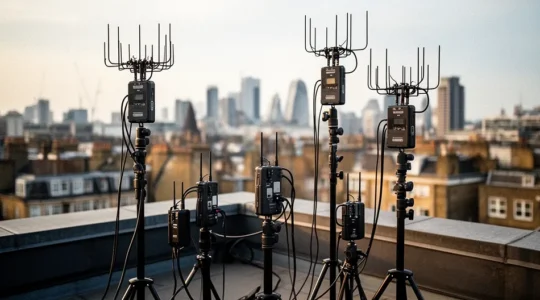
How to Use Wireless Lavs in London Without Frequency Interference?
Operating wireless microphones in central London isn’t about finding a clear frequency; it’s about implementing a disciplined coordination framework to survive in a hostile RF environment. Success depends on a legal foundation, starting with a mandatory Ofcom licence for Channel…
Lire la suite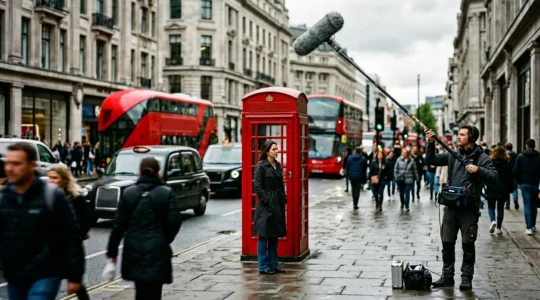
How to Isolate Dialogue in a Busy London Street Using a Shotgun Mic?
Capturing clean dialogue on a busy London street feels like an impossible task, but the solution isn’t a more expensive microphone. The key is to master the physics of sound and environment. By understanding how to create acoustic shadows, leveraging…
Lire la suite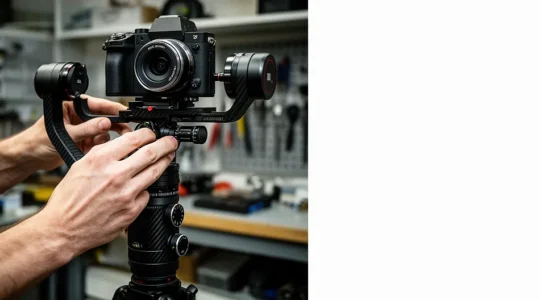
How to Balance a Gimbal: A Technician’s Guide to Saving Your Motors and Battery
The common ‘drop test’ for gimbal balancing is the primary cause of motor strain and micro-jitters; true stability comes from achieving dynamic equilibrium, not just static balance. A statically balanced gimbal can still be dynamically unbalanced, forcing motors to fight…
Lire la suite
What Lighting Kit Fits in an Uber for London City Shoots?
The secret to a London-proof lighting kit isn’t just the gear you buy, but the agile, friction-free system you build around it. Focus on compact, battery-powered LED soft panels for rapid deployment and minimal weight. Mastering logistics, like efficient packing…
Lire la suite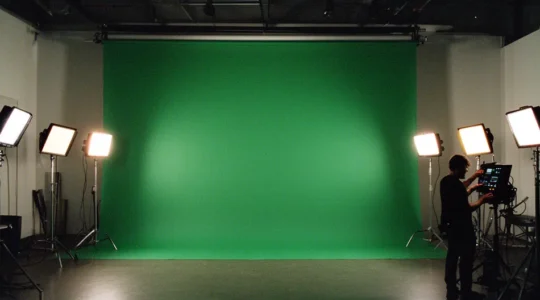
How to Light a Green Screen Evenly Using Bi-Colour LED Panels?
Efficient green screen lighting is less about brightness and more about strategic control over cost, colour, and reliability. Switching to bi-colour LED panels directly cuts cooling and power expenses, significantly impacting your studio’s Total Cost of Ownership (TCO). True colour…
Lire la suite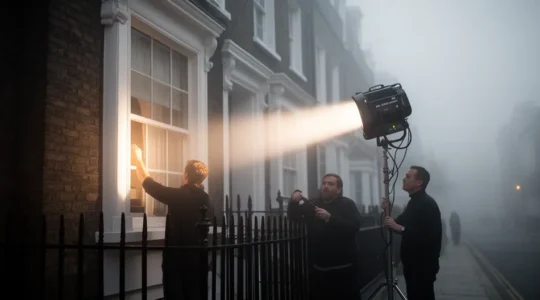
How to Simulate Sunlight on a Grey London Day Using HMI Lighting?
The secret to faking sunlight in the UK isn’t bigger lights; it’s total system control, from the generator to the gel, to master the chaos of British weather. An HMI’s raw power is useless without stable, clean electricity, making a…
Lire la suite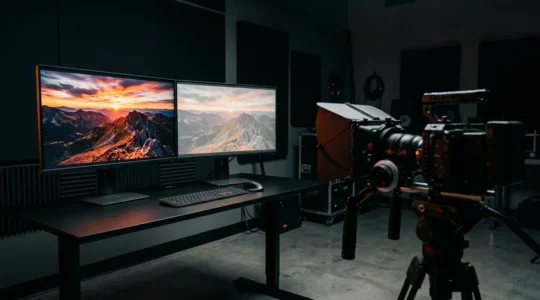
How to Shoot for HDR Delivery Without Ruining the SDR Version?
Creating a great SDR version from an HDR master isn’t a conversion; it’s a controlled extraction of luminance and color data. Success depends on managing exposure on set to protect mid-tones, not just highlights. Accurate metadata (PQ/HLG) and color space…
Lire la suite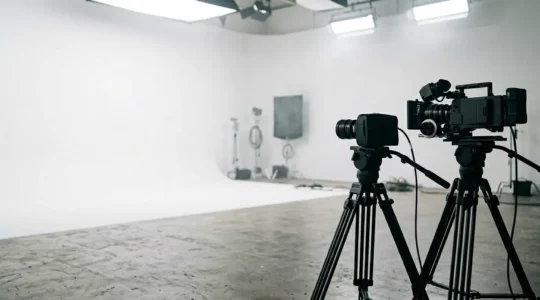
Arri Alexa or Red Komodo: Which Camera Justifies the Cost for a £10k Commercial?
For a £10k commercial, the choice between Arri and RED isn’t about image quality—it’s about financial risk management. Arri’s « perception premium » can impress clients, but its true value lies in workflow efficiency and reliable colour science that reduce post-production costs….
Lire la suite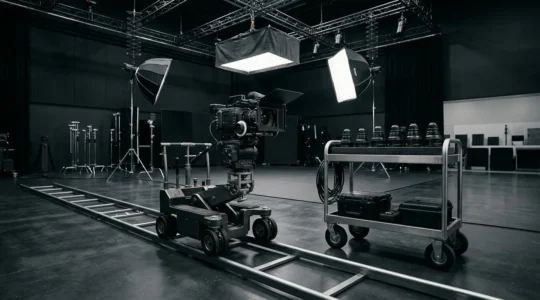
Why Choosing « Cinema Quality » Lenses Matters for Industrial Corporate Videos?
Your high-precision product looks cheap on video because the lens—not the camera—lacks optical integrity. Cheap lenses introduce distortion and softness (low micro-contrast) that visually undermine the engineering quality of your product. Professional cinema lenses offer mechanical reliability and geometric fidelity,…
Lire la suite