Blog
Modern video production has evolved significantly beyond the camera lens. Today, a production agency functions partly as a creative studio and partly as a high-performance data centre. As resolution standards climb from 4K to 8K and remote collaboration becomes the norm, the technical backbone of your workflow—how you store, name, and transfer assets—is just as critical as the cinematography itself.
Ignoring the invisible infrastructure of video production can lead to catastrophic bottlenecks, from corrupt files on location to network congestion that halts a delivery. This resource explores the essential technical pillars that support successful video projects, ensuring that creativity is never hampered by hardware limitations or poor data management.
The Strategic Value of Raw Footage and Asset Management
Many producers view raw footage merely as the ingredients for a final cut, discarding the unused takes once the project is delivered. However, experienced professionals understand that raw files represent a significant long-term asset. Deleting what seems like « useless » takes can prove to be a costly mistake if a client requests a rebrand or a narrative shift months later.
Legal Ownership and Future-Proofing
Possessing the raw files provides a layer of insurance against future demands. It is vital to scrutinise contract clauses regarding raw file ownership; losing rights to your source material can leave you vulnerable. Furthermore, keeping extensive archives allows for:
- Cost avoidance: Preventing expensive reshoots (which can run into thousands of pounds/dollars) when a client needs a minor alteration.
- Historical archiving: Preserving high-quality assets that can be repurposed for future campaigns or documentaries.
- Flexibility: Adapting content for platforms that did not exist at the time of shooting.
Data Handling: From Location to Long-Term Storage
The journey of a video file begins the moment it leaves the camera. Securing this data requires a rigorous protocol to prevent corruption, a nightmare scenario that no amount of post-production magic can fix.
Secure Offloading and Organization
On location, the transfer of media cards is a critical vulnerability point. Using verified transfer software rather than simple drag-and-drop methods is essential to ensure bit-for-bit accuracy. Once secured, the logic of file naming comes into play. A cryptic file name like « C0012.mov » is useless in a busy edit suite. Implementing a robust naming convention allows an editor to locate a specific clip in seconds, not hours, streamlining the entire post-production phase.
Storage Architecture: SSD vs. HDD RAID
Not all hard drives are created equal, and choosing the right system depends on the stage of the workflow:
- SSD (Solid State Drives): Essential for the editing phase, offering the high read/write speeds necessary for playback of high-bitrate footage without dropped frames.
- HDD RAID (Redundant Array of Independent Disks): The standard for long-term archiving. While slower, they offer massive capacity and redundancy, protecting against total data loss if a single drive fails.
Navigating the 8K Resolution Landscape
The shift towards 8K acquisition is often dismissed as marketing hype, but it offers tangible benefits for specific production scenarios, provided the hardware can handle the load.
Creative Flexibility vs. Technical Constraints
Shooting in 8K for a 1080p or 4K delivery is not about pixel peeping; it is about flexibility. It allows editors to punch in, reframe, or turn a single wide shot into two distinct angles for vertical social media formats without quality loss. Additionally, the extra resolution provides more data for accurate green screen keying.
However, this comes with significant trade-offs:
- Focus Pulling: The shallow depth of field at high resolutions makes focus errors unforgivingly obvious.
- Hardware Strain: Editing native 8K footage requires immense processing power, often necessitating the use of proxies to prevent standard laptops from crashing.
- Storage Volume: The data footprint is massive, raising the question of whether the storage cost is justified for the specific project requirements.
Connectivity and Cloud Infrastructure
In an era of cloud editing and remote delivery, your office internet connection is a production tool as vital as your camera. Many agencies suffer from the bottleneck of asymmetric connections, where download speeds are high, but upload speeds—crucial for sending video files—are a fraction of the bandwidth.
Optimizing Bandwidth for Video
Relying on standard broadband « upto » speeds can be disastrous during a 5 PM deadline rush when contention ratios slow down the network. Professional environments often require leased lines with dedicated bandwidth to guarantee throughput.
Advanced Transfer Protocols
When moving terabytes of data across the web, standard protocols often fail to utilise the full available bandwidth due to latency. Implementing UDP (User Datagram Protocol) transfer tools can maximise connection speeds, ensuring that large deliveries arrive on time. Furthermore, scheduling heavy backups outside of office hours is a simple yet effective way to avoid choking the network when editors need it most.

Is Your Office Internet Fast Enough for 4K Cloud Editing Workflows?
Relying on advertised download speeds is a critical mistake; the actual bottleneck for 4K video workflows is insufficient, contended upload bandwidth, which directly translates into lost productivity and increased operational costs. Asymmetrical internet connections mean your team spends hours waiting…
Lire la suite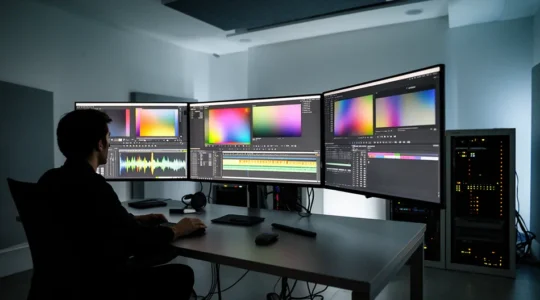
Is Shooting in 8K Worth the Storage Cost for 1080p Delivery?
Shooting in 8K for 1080p delivery is not a simple upgrade; it’s a strategic decision that can either multiply your assets or sink your budget. It offers unmatched reframing capabilities (« asset multiplication ») and precision for visual effects, providing a clear…
Lire la suite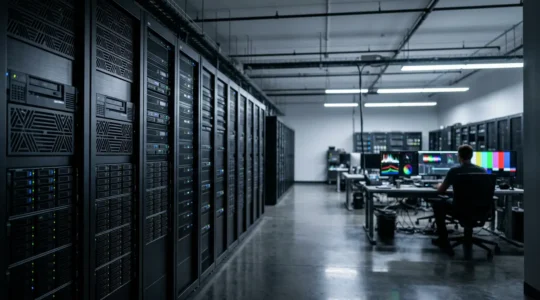
Why Keeping Raw Footage is Your Best Insurance Against Future Rebrands?
Viewing raw footage storage as a ‘dead cost’ is a critical strategic error; it’s a valuable, depreciating asset that functions as quantifiable insurance against future business risks. Failing to archive properly introduces massive financial risks from potential reshoots and lost…
Lire la suite