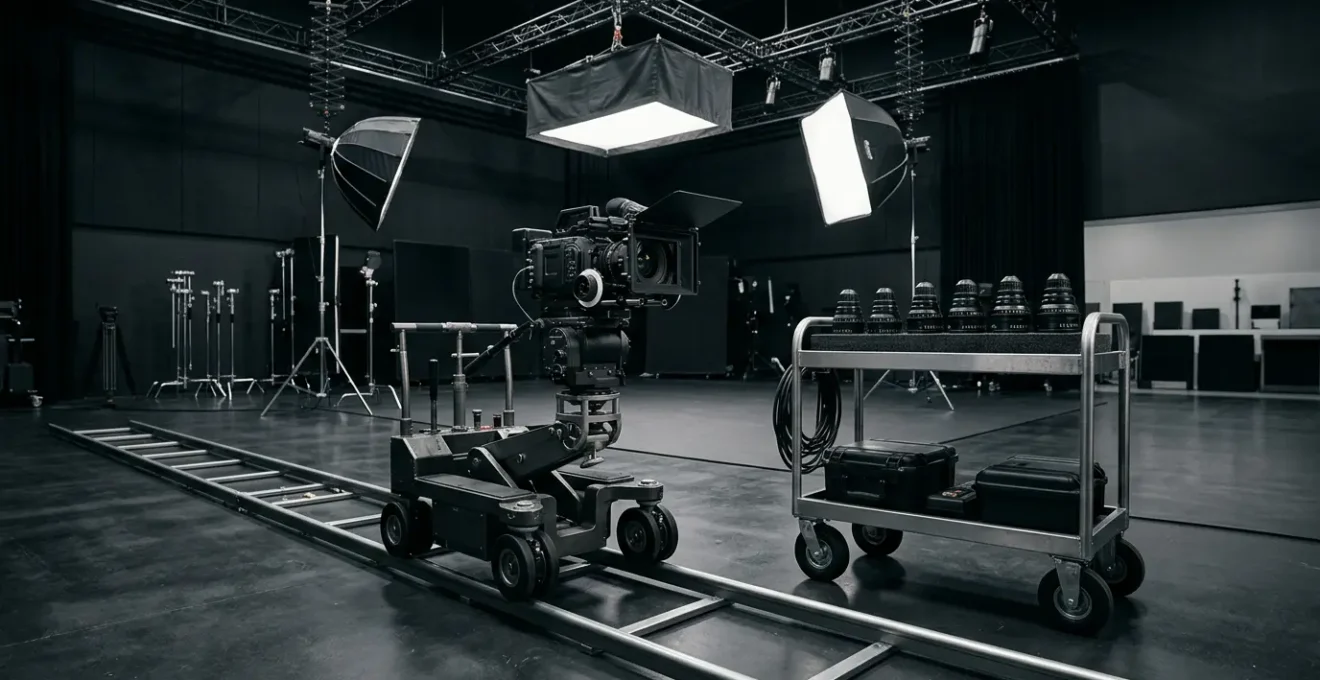
Your high-precision product looks cheap on video because the lens—not the camera—lacks optical integrity.
- Cheap lenses introduce distortion and softness (low micro-contrast) that visually undermine the engineering quality of your product.
- Professional cinema lenses offer mechanical reliability and geometric fidelity, ensuring focus accuracy and true-to-life representation on set.
Recommendation: Treat lens selection as a critical engineering decision. Discuss optical specifications, not just camera models, with your production team to protect your product’s perceived value.
You’ve spent years engineering a product to a micron’s tolerance. Its surfaces are flawless, its mechanisms precise. Then, the corporate video comes back, and it looks… soft. Inexpensive. The sharp, metallic edges of your flagship machine blur into a generic background. The feeling of precision and high value is gone, replaced by a visual mediocrity that betrays the quality of the product itself. The usual advice revolves around « good lighting » or hiring a « creative director, » but these are secondary concerns. The real culprit is often hiding in plain sight: the glass.
The distinction between a standard video lens and a true cinema lens isn’t just about a « cinematic look »; it’s a fundamental difference in optical engineering and mechanical reliability. For a technical director overseeing a product video, this isn’t an artistic choice—it’s an extension of the same commitment to precision that defines your own work. A cheap lens introduces subtle but catastrophic failures—chromatic aberration, focus breathing, and poor micro-contrast—that actively devalue the subject it’s supposed to glorify. It’s the visual equivalent of using a warped ruler to measure a precision-milled component.
But what if the key to a high-end industrial video wasn’t in chasing abstract creative concepts, but in demanding a higher standard of optical engineering from your production team? This isn’t about artistic preference; it’s about ensuring the visual language of the video matches the technical excellence of your product. The lens is the first and most important translator of your work into the visual medium. Choosing the right one is not a line item on a rental list; it’s a strategic decision to protect your product’s integrity.
This article will deconstruct the critical, often-overlooked technical reasons why cinema-quality lenses are not a luxury but a necessity for industrial and corporate videography. We will move beyond subjective aesthetics to explore the measurable optical and mechanical characteristics that separate a professional tool from one that will ultimately make your high-tech product look like a toy. We will cover everything from inspecting rental equipment for flaws to understanding which camera systems justify their cost for a high-stakes commercial.
Summary: The Technical Director’s Guide to Cinema Optics
- Why Cheap Lenses Make High-Tech Products Look Like Toys?
- How to Inspect Rental Lenses for Micro-Scratches Before Accepting Liability?
- Anamorphic vs Spherical: Which Lens Geometry Fits Architectural Videography?
- The Mount Adapter Error That Destroys Focus Accuracy on Set
- How to Shoot in Cramped UK Offices Without Distorting Perspective?
- Why Do Clients Take You More Seriously When You Show Up with an Arri?
- Vintage Glass or Sharp Modern Lenses: Which Convey « Authenticity »?
- Arri Alexa or Red Komodo: Which Camera Justifies the Cost for a £10k Commercial?
Why Cheap Lenses Make High-Tech Products Look Like Toys?
The fundamental failure of a cheap lens lies in its inability to resolve fine detail and maintain geometric accuracy. For an engineered product, this is disastrous. A « soft » image isn’t an artistic choice; it’s a failure of optical integrity. Cheaper glass and simpler optical formulas lead to several key defects that actively degrade the perception of quality. The most common is chromatic aberration, or color fringing, where high-contrast edges—like a chrome logo on a dark chassis—are outlined in a thin purple or green halo. This immediately signals a low-quality image and makes precise details look messy and undefined.
Furthermore, these lenses suffer from poor micro-contrast. While « sharpness » refers to the ability to resolve edges, micro-contrast is the ability to distinguish between subtle, adjacent tones. It’s what gives an image its sense of depth and texture. A lens with high micro-contrast will render the subtle grain of a brushed aluminum finish or the difference between matte and semi-gloss surfaces with startling clarity. A cheap lens will mush these details together, making a multi-textured, complex product appear flat and plasticky.
Finally, there’s focus breathing—the subtle shift in the field of view as you change focus. Imagine a shot that racks focus from the product’s brand name in the foreground to a key feature in the background. With a cheap lens, the entire frame will appear to zoom in or out slightly during the focus pull. This is distracting and feels amateurish. A true cinema lens is engineered to eliminate breathing, ensuring that the focus pull directs the viewer’s eye without any unsettling distortion of the frame. These are not aesthetic « nice-to-haves »; they are fundamental engineering characteristics that either respect or betray the precision of the subject being filmed.
How to Inspect Rental Lenses for Micro-Scratches Before Accepting Liability?
When you rent professional cinema lenses, you are renting tools worth tens of thousands of pounds. Accepting them from the rental house means accepting liability for their condition. A thorough inspection is not just good practice; it’s a crucial financial safeguard. Micro-scratches, fungus, or dust inside the lens elements might not be obvious at first glance but can cause significant flare or softness in the final image, especially when shooting with a small aperture (high f-stop) or pointing towards a light source.
The inspection process should be methodical. Start with the exterior: check the housing for dents or damage, ensure the focus and iris rings move smoothly without any grinding, and confirm the lens mount is clean and undamaged. The real test, however, is looking through the glass. You’ll need a bright, single-point light source like a penlight or your phone’s flashlight. Do not look directly into a large, bright overhead light, as this can hide imperfections.
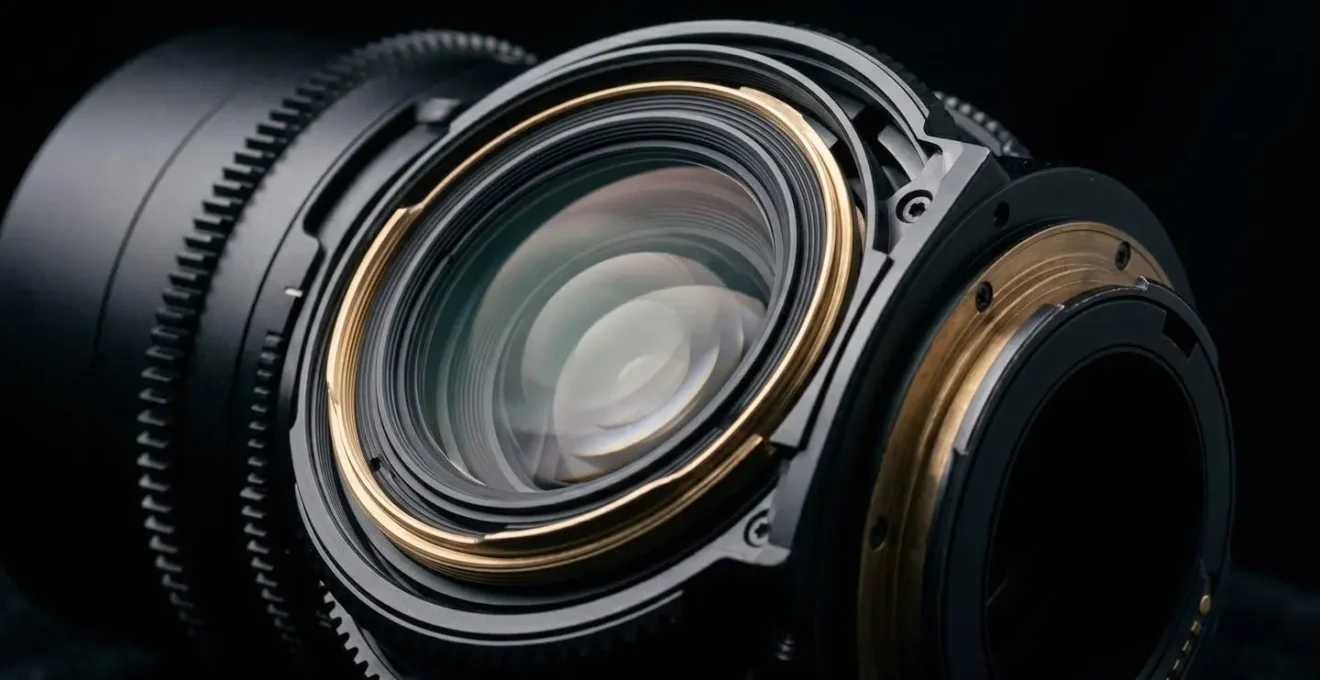
As the image above illustrates, a detailed inspection requires controlled lighting. Hold the lens at arm’s length. Shine the penlight through the rear element and look into the front element. Slowly rock the lens back and forth. This will cause any internal dust, haze, or the tell-tale spidery lines of fungus to catch the light and become visible. Then, reverse the process, shining the light through the front and looking through the back. Pay special attention to the center of the glass, but don’t neglect the edges. Any discovered issues should be documented and pointed out to the rental house immediately before you sign any paperwork.
Your Pre-Rental Lens Inspection Protocol
- External Housing Check: Inspect the lens body for any dents, deep scratches, or damage. Confirm focus, iris, and zoom rings move smoothly and without resistance across their entire range.
- Glass Surface Inspection (Front and Rear): Use a blower to remove surface dust. With a microfiber cloth, gently wipe the front and rear elements. Look for any visible scratches or coating marks.
- The Penlight Test: Shine a strong, single-point light (like a phone’s LED) through one end of the lens while looking through the other. Rock the lens to catch reflections from internal dust, haze, or fungus.
- Aperture Blade Check: Set the aperture to its widest setting (e.g., T1.5) and then its narrowest (e.g., T22). The blades should move quickly and form a clean, symmetrical iris. Check for any oil on the blades.
- Mount and Electronics: Inspect the lens mount for any signs of wear or damage. If the lens has electronic contacts, ensure they are clean and free of corrosion.
Anamorphic vs Spherical: Which Lens Geometry Fits Architectural Videography?
The choice between anamorphic and spherical lenses is a fundamental decision about the geometric language of your video. Spherical lenses, the industry standard, project a circular image onto the camera’s sensor. They are designed for geometric fidelity—to render the world as accurately as possible, with straight lines appearing straight. Anamorphic lenses, on the other hand, are designed to create a specific aesthetic. They contain a cylindrical element that horizontally squeezes the image onto the sensor. In post-production, this image is de-squeezed, resulting in a much wider aspect ratio (like 2.39:1) and characteristic visual artifacts like oval bokeh and horizontal lens flares.
While the wide aspect ratio and unique flares of anamorphic lenses are prized for narrative filmmaking to create an « epic » or « cinematic » feel, they are often the wrong choice for architectural and industrial product videography where precision is paramount. The very nature of the anamorphic squeeze and de-squeeze process introduces inherent optical distortion. As one industry analysis notes, this can be a major problem for certain subjects:
Anamorphic lenses can vertically stretch and distort buildings, making them look unnaturally ‘fat’ or ‘puffy’.
– Industry Analysis, Article content analysis
For a technical director showcasing a new facility, a precision-engineered machine, or any product where straight lines and accurate proportions are a testament to its quality, this distortion is unacceptable. Spherical lenses are the superior tool for this job. They provide a clean, pure, and undistorted view that respects the subject’s design. The following table breaks down the key differences:
| Feature | Anamorphic | Spherical |
|---|---|---|
| Field of View | Wider horizontal FOV | Standard FOV |
| Bokeh Shape | Oval/elliptical | Circular |
| Barrel Distortion | Can stretch vertically | Minimal distortion |
| Flare Characteristics | Horizontal blue streaks | Circular/minimal |
| Best Use Case | Cinematic/emotional shots | Architectural purity |
The Mount Adapter Error That Destroys Focus Accuracy on Set
One of the most insidious and often overlooked points of failure in a camera setup is the lens mount adapter. In the quest for flexibility, crews will often use adapters to fit a lens with one type of mount (e.g., a Canon EF-mount photography lens) onto a camera body with a different mount (e.g., a Sony E-mount or a professional PL-mount). While this works in theory, in practice it introduces a critical risk to focus accuracy. The distance between the rear of the lens and the camera’s sensor—known as the flange focal distance—is calibrated to a tolerance of a few microns. A cheap or poorly machined adapter can introduce a tiny error in this distance, making it impossible to achieve sharp focus at infinity or causing the focus marks on the lens barrel to become completely inaccurate.
For a professional focus puller, this is a nightmare. They rely on the engraved distance marks on a cinema lens to hit their focus points with repeatable precision. If an adapter throws off this calibration, they are essentially working blind, relying solely on the monitor. This is slower, less reliable, and increases the chance of missing critical focus on a key product feature or a line of dialogue. The solution is to prioritize a native, robust mount system whenever possible. The industry standard for high-end cinema is the Arri PL (Positive Lock) mount. It is designed for heavy lenses, secure locking, and, most importantly, extreme precision, ensuring that any PL-mount lens will work perfectly with any PL-mount camera.
Case Study: The Professional Superiority of PL Mount vs. EF Mount
The practical difference between a pro-level mount and a prosumer one is not just about build quality; it’s about the entire ecosystem and its suitability for high-pressure environments. Industry analysis reveals that while the EF mount is popular, it is not designed for the rigors of high-end filmmaking. An analysis of cinema camera market trends notes that EF mount lenses hold a lesser share and are projected to have slower growth in the professional market. This is because they were primarily designed for DSLRs, offering less durability and fewer top-tier optical options compared to the vast range of high-quality lenses available in PL mount. For professional filmmakers, the PL mount’s versatility and superior optical performance make it the clear choice for projects demanding uncompromising quality and reliability.
How to Shoot in Cramped UK Offices Without Distorting Perspective?
A common challenge in corporate video is shooting in small, uninspiring spaces like a typical UK office or a tight server room. The instinctive solution for many is to reach for a wide-angle lens to « get everything in. » As the Artlist Editorial Team explains in their lens guide, « Anything in the 14-35mm range is considered a wide angle, and typical use cases include landscape and architecture videos. » While true, using very wide lenses (e.g., 14-24mm) in small interiors creates significant perspective distortion. Lines at the edge of the frame will appear to stretch and curve, and anything close to the lens will look disproportionately large. This can make a professional office look like a funhouse mirror and is unflattering for people on camera.
The professional, and somewhat counter-intuitive, solution is often to do the opposite: use a longer lens and move the camera further away. A lens in the 50mm or 85mm range has a « normal » or slightly compressed perspective. This means it renders faces and objects with more natural proportions and flattens the space between the foreground and background. This compression has a powerful secondary benefit: it allows you to be highly selective about what the viewer sees. Instead of showing the entire cramped office, you can position the subject in front of a small, well-lit, and carefully arranged part of the room (a nice plant, a piece of art, a window with a view). The longer lens and shallower depth of field will render the rest of the background as a soft, unobtrusive blur.
As one cinematographer on PremiumBeat notes, this technique is a professional shortcut to achieving a high-end look even in a suboptimal location. By using a 50mm or 85mm lens, you can create a beautiful, cinematic image by focusing attention on the subject and simply not worrying about dressing the entire frame. It’s a technique that trades a wide, distorted view for a controlled, compressed, and ultimately more professional composition. It requires more space to position the camera, but the result is a significant leap in visual quality, avoiding the amateur look of wide-angle distortion.
Why Do Clients Take You More Seriously When You Show Up with an Arri?
In the world of high-stakes corporate video, perception is reality. Arriving on set with an Arri camera, like the Alexa Mini, sends an immediate and powerful signal to the client. It’s not just about the technical specifications of the camera; it’s about the brand’s century-long legacy of reliability and its status as the gold standard in cinematic imaging. As Y.M.Cinema Magazine astutely observes, « ARRI never chased spec sheets. It built trust inside professional production pipelines. » This trust is the camera’s most valuable feature. When a client, particularly one from an engineering or high-tech background, sees Arri equipment, they recognize a fellow commitment to best-in-class tools and uncompromising quality.
This reputation isn’t just marketing; it’s earned on countless film sets. Arri cameras are famous for their robust build, intuitive menus, and, most importantly, their utter reliability. They just work. This builds confidence not only in the client but also in the crew, allowing them to focus on creativity rather than troubleshooting. The data backs this up. An industry survey of films premiering at the Toronto International Film Festival found that the Arri Alexa 35 and Arri Alexa Mini were the dominant cameras, used on nearly half of the surveyed productions. This market dominance reinforces the brand’s position as the professional’s choice.
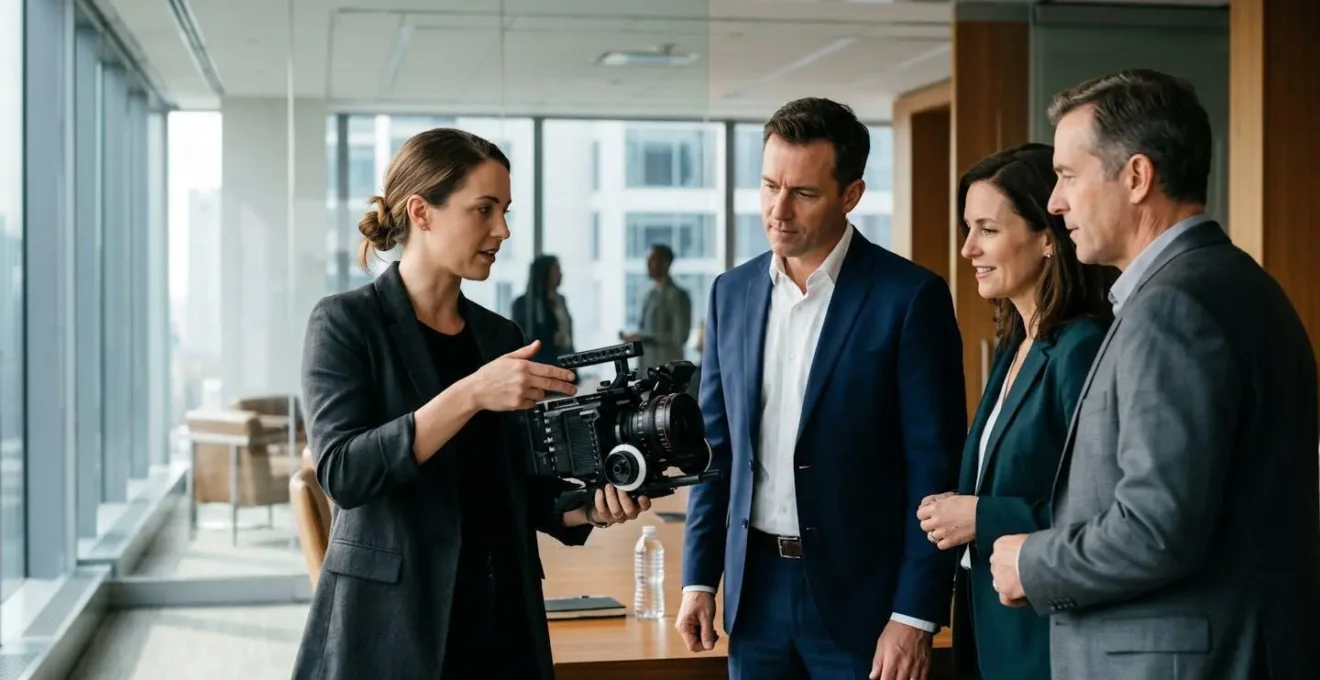
Showing up with an Arri is a non-verbal declaration. It tells the client that you are investing in the best possible image quality for their project, that you prioritize on-set reliability, and that you operate at the highest level of the industry. It transforms the conversation from one about cost-cutting to one about achieving excellence. For a technical director who has invested heavily in their own product’s R&D, seeing that a production team has made a similar investment in their tools creates an immediate and powerful sense of alignment and trust.
Vintage Glass or Sharp Modern Lenses: Which Convey « Authenticity »?
The concept of « authenticity » in videography is complex, and lens choice is central to achieving it. The decision between vintage and modern lenses depends entirely on what kind of authenticity you are trying to convey. For a technology or engineering company, authenticity is often synonymous with precision, clarity, and truthfulness. In this context, a sharp, modern cinema lens is the ideal tool. These lenses are optical marvels, engineered with high-end glass and advanced coatings to minimize imperfections. They deliver a clean, crisp image with high contrast, minimal distortion, and accurate color rendition, allowing the product to be shown exactly as it is. This is the authenticity of perfect representation.
Modern cine lenses are designed to be optically « perfect. » They excel in high-contrast lighting, reduce unwanted artifacts like barrel distortion and color fringing, and deliver consistently sharp results from the center of the frame to the edge. This clinical precision ensures that the viewer’s attention is on the product’s design and engineering, not on the character of the lens itself. As one professional cinematographer noted regarding their choice of the modern Arri Alexa system, its ability to faithfully capture specific colors was critical to honoring the set design and maintaining trust in the image—a key component of technical authenticity.
On the other hand, some brands may seek an authenticity rooted in emotion, nostalgia, and character. This is where vintage lenses, or modern lenses designed to emulate them, come into play. These lenses are optically « imperfect » by modern standards. They tend to be softer, have lower contrast, and produce more dramatic and unpredictable flares, vignetting, and unique bokeh. These « flaws » can add a layer of warmth, personality, and human touch to an image, making it feel less clinical and more organic. This can be effective for brand stories, lifestyle content, or any video aiming to evoke a feeling rather than showcase technical prowess. Ultimately, the choice is strategic: modern lenses convey the authenticity of the product itself, while vintage lenses convey the authenticity of a feeling or a story.
Key Takeaways
- Optical Integrity is Non-Negotiable: Cheap lenses degrade perceived product quality through softness, distortion, and color fringing.
- Tools Signal Intent: Using industry-standard equipment like Arri cameras and PL-mount lenses demonstrates a commitment to excellence that technical clients recognize and respect.
- Context is King: The « best » lens choice (Anamorphic vs. Spherical, Vintage vs. Modern) depends entirely on the project’s goal—geometric purity for products, emotional character for stories.
Arri Alexa or Red Komodo: Which Camera Justifies the Cost for a £10k Commercial?
For a corporate commercial with a modest but serious budget, say £10,000, the choice of camera often comes down to two industry powerhouses: Arri and RED. This decision has significant implications for both the budget and the final product, within a market that is constantly evolving. The global cinema camera market size is projected to grow substantially, indicating a strong demand for high-quality production tools. For a project of this scale, the decision often pits the industry-standard reliability of an Arri Alexa Mini against the agile, high-resolution power of a RED Komodo.
The Arri Alexa is the established benchmark for reliability and image quality. Its daily rental cost is higher, but it comes with a workflow advantage: it can record in Apple ProRes, a format that is less demanding on computers, saving time and money in post-production. Its reputation for being virtually unbreakable on set provides peace of mind, which is invaluable on a tight schedule. The RED Komodo is a smaller, more modern camera that offers incredible flexibility. Its rental cost is significantly lower, and it can shoot in very high resolutions (like 6K) in RED’s proprietary RAW format. This provides immense flexibility for reframing and color grading in post-production, but at the cost of a more data-intensive and computationally demanding workflow.
The choice ultimately depends on the project’s priorities, as outlined in the comparative table below. It provides a clear breakdown of the strategic trade-offs between these two excellent camera systems.
| Factor | ARRI Alexa | RED Komodo |
|---|---|---|
| Daily Rental Cost | Higher (£600-£950) | Lower (£300-£500) |
| Post-Production Workflow | ProRes (simpler/faster) | RAW (more complex/flexible) |
| Reliability Reputation | Industry-leading | Good |
| Client Perception | Premium/established | Agile/modern |
| Best for £10k Budget | When reliability is critical | When flexibility is needed |
For a £10k commercial, if the shoot is complex, has only one chance to get the shot, and needs a fast turnaround, the higher rental cost of the Arri Alexa is justified by its reliability and simpler workflow. If the project requires maximum resolution, has more time for post-production, and needs a smaller, more nimble camera for tight spaces or gimbal work, the RED Komodo offers incredible value and flexibility. The cost isn’t just the rental fee; it’s the total cost of the entire production pipeline.
The next time you commission a corporate video, don’t just ask about the camera—insist on a discussion about the glass. Query the optical characteristics, the mount system, and the rationale behind each choice. Framing the conversation around optical engineering and mechanical reliability ensures that the production team’s values align with your own. It is the single most important decision you can influence to protect your product’s integrity and ensure its perceived value is not just maintained, but amplified.