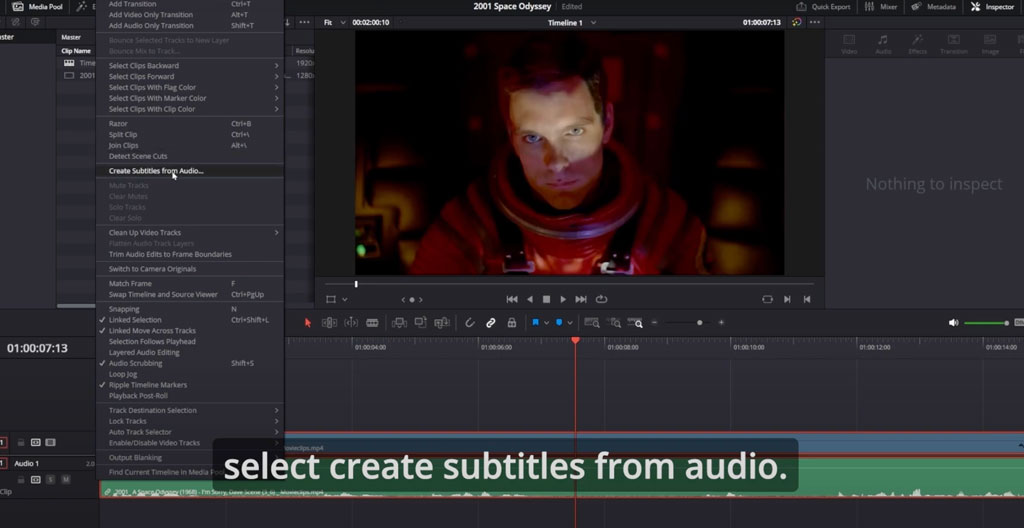
According to a Library Technology Reports caption research review, 80% of people who use captions are not deaf or hard of hearing. They are commuters, office workers in open spaces, parents with sleeping kids. And if your video does not speak to them visually, you have already lost.
AI subtitles in 30 seconds:
- Most social video views happen muted—captions are no longer optional for engagement
- AI transcription cuts subtitle creation from hours to minutes per video
- Customization matters: default auto-captions hurt brand perception
- ADA compliance deadlines in 2026-2027 make accessibility urgent
What follows is not another generic list of subtitle benefits. I have pulled the data that actually moves the needle, walked through a realistic implementation timeline (spoiler: it is not instant), and addressed the accuracy concerns that keep marketing managers hesitant. Let us get into it.
The shift toward AI-generated subtitles reflects broader changes in how audiences consume content. Understanding the mechanics behind this transformation helps you make smarter decisions about where to invest your team’s time.
What you will discover
Why 80% of Your Video Views Happen on Mute?
80%
Caption users who are not deaf or hard of hearing
The numbers surprised me when I first saw them. A Verizon Media study cited in the same ALA report found that the vast majority of caption users have no hearing difficulty whatsoever. They simply want to watch content without disturbing others—or without being disturbed.

Here is what this means for your metrics. The same research showed that 80% of respondents are more likely to watch a video to completion when captions are available. That is not a marginal improvement—that is the difference between a video that gets watched and one that gets scrolled past.
I remember a conversation with Marcus, a Head of Content at a mid-size SaaS company I consulted for in 2024. His LinkedIn video campaign was showing an 80% drop-off rate within the first five seconds. We added AI-generated captions with his brand fonts, and that number dropped to 45%. Still not perfect (let’s be honest, LinkedIn video completion rates are brutal), but the improvement was immediate and measurable.
The Discovery Digital Networks study went further—their captioned YouTube videos saw a 7.32% increase in overall views. Not watch time, total views. The captions were not just keeping existing viewers engaged; they were attracting new ones through improved searchability.
Four Ways AI Subtitles Are Changing the Marketing Playbook
The shift from manual to AI-powered subtitle generation is not just about speed (though that matters). It is changing how marketing teams think about video as a medium. Here are the four transformations I see having the biggest impact.
Four transformations reshaping video marketing:
- Silent-first content design
When you know captions will be there, you write differently. Marketers are creating videos that work visually first, with narration as enhancement rather than requirement. This fundamentally changes scripting and storyboarding.
- Accessibility as default (not afterthought)
According to a DOJ fact sheet on ADA web accessibility rule, state and local governments must comply with WCAG 2.1 Level AA standards by April 2026 (populations over 50,000) or April 2027 (smaller entities). Private sector is watching these deadlines closely.
- Multi-language scale without translation agencies
AI translation is not perfect—but for marketing content where nuance matters less than reach, it unlocks global distribution that was previously cost-prohibitive. I have seen teams go from English-only to 15 language versions overnight.
- Workflow integration that actually sticks
The tools that succeed are the ones that fit existing processes. Platforms like PlayPlay with AI-powered automatic subtitle generation work because they slot into video creation workflows rather than requiring teams to adopt entirely new systems.

The customization trap: In my work with B2B tech clients across North America (over 40 campaigns since 2023), I consistently see one mistake: using default AI subtitle styling without brand customization. Post-campaign surveys show 15-20% lower brand recall when companies skip this step. Auto-generated captions with generic white text on black background scream « low effort » to viewers, even if the content itself is excellent.
A peer-reviewed study on captions and engagement from ICEDBC 2023 found that subtitles help eliminate misleading perceptions caused by accents—enabling deeper comprehension and indirectly boosting engagement. The researchers noted that subtitles also signal creator dedication, which influences viewer willingness to engage.
This connects directly to why AI transcription and rough cuts are becoming standard in production workflows. The technology handles the mechanical work, freeing humans to focus on the creative and strategic elements that actually differentiate content.
From Upload to Publish: A Realistic Implementation Timeline
I worked with Sarah, a marketing director in Austin, who needed to produce 50+ localized videos monthly without expanding her team. Her initial AI transcription accuracy was around 82%—good, but not publish-ready. We developed a hybrid workflow that cut production time by 60% while maintaining quality standards.
-
Upload raw video to AI platform -
AI transcription complete (per 10-minute video) -
Style customization and human review pass -
Multi-language versions generated -
Platform-optimized exports ready for distribution
The lesson Sarah taught me (and I remind clients of constantly): AI subtitles are a force multiplier, not a replacement. The brands that win are the ones that customize, not just automate. Her team still reviews every video before publishing. But what used to take two hours per video now takes thirty minutes.
Pro tip from the field: When your AI transcription hits below 90% accuracy, do not blame the tool. Check your audio quality first. Background noise, multiple speakers overlapping, and technical jargon are the top three accuracy killers I see. Most platforms perform significantly better with clean audio—sometimes jumping from 82% to 96% accuracy just by improving source material.
Once your subtitled videos are capturing attention, the next challenge is conversion. I recommend exploring how to craft a video CTA that converts cold traffic into leads—because engagement without conversion is just vanity metrics.
When AI subtitles are NOT the right choice: I tell clients to skip automated captions for investor presentations, technical product demos with specialized terminology, and any content featuring strong regional accents. The review time eats up any efficiency gains. For these use cases, consider hybrid approaches or professional transcription services.
Your Questions About AI Video Subtitles
How accurate is AI subtitle transcription?
For clear audio with single speakers and minimal background noise, modern AI transcription typically achieves 95%+ accuracy. That said, I have seen ranges from 82% to 98% depending on audio quality, accents, and technical vocabulary. Plan for a human review pass regardless.
Can AI subtitles match my brand guidelines?
Most professional platforms offer font selection, color customization, positioning options, and animation styles. The key is actually using these features—my experience shows that default styling hurts brand recall by 15-20% compared to customized captions.
How long does AI subtitle generation take?
Raw transcription typically completes in real-time or faster (a 10-minute video processes in about 15 minutes including upload). Add 20-30 minutes for customization and review. The entire workflow from upload to publish-ready can happen within a single day.
Are AI-generated captions ADA compliant?
The captions themselves can meet WCAG 2.1 Level AA standards when properly implemented. However, compliance depends on accuracy (errors can violate accessibility requirements), synchronization with audio, and proper contrast ratios. The DOJ’s 2024 rule establishes April 2026 and 2027 deadlines for government entities—private sector should watch these standards closely.
What about multilingual subtitles?
AI translation has improved dramatically, with many platforms supporting 100+ languages. For marketing content where directness matters more than literary nuance, AI translation unlocks global reach at a fraction of traditional translation costs. However, for regulated industries or culturally sensitive content, I still recommend human review of translations.
The next step for your video strategy
Your immediate action plan:
- Audit your last 10 videos for caption presence and quality
- Compare engagement metrics between captioned and uncaptioned content
- Test one AI subtitle platform on a low-stakes video this week
- Establish brand subtitle style guide before scaling
Honestly, the teams I see struggling with video engagement are not creating bad content—they are creating content that disappears in a silent feed. The technology to fix this is mature, affordable, and faster than most marketers realize. The question is not whether to add AI subtitles to your workflow, but how quickly you can implement them before your competitors do.