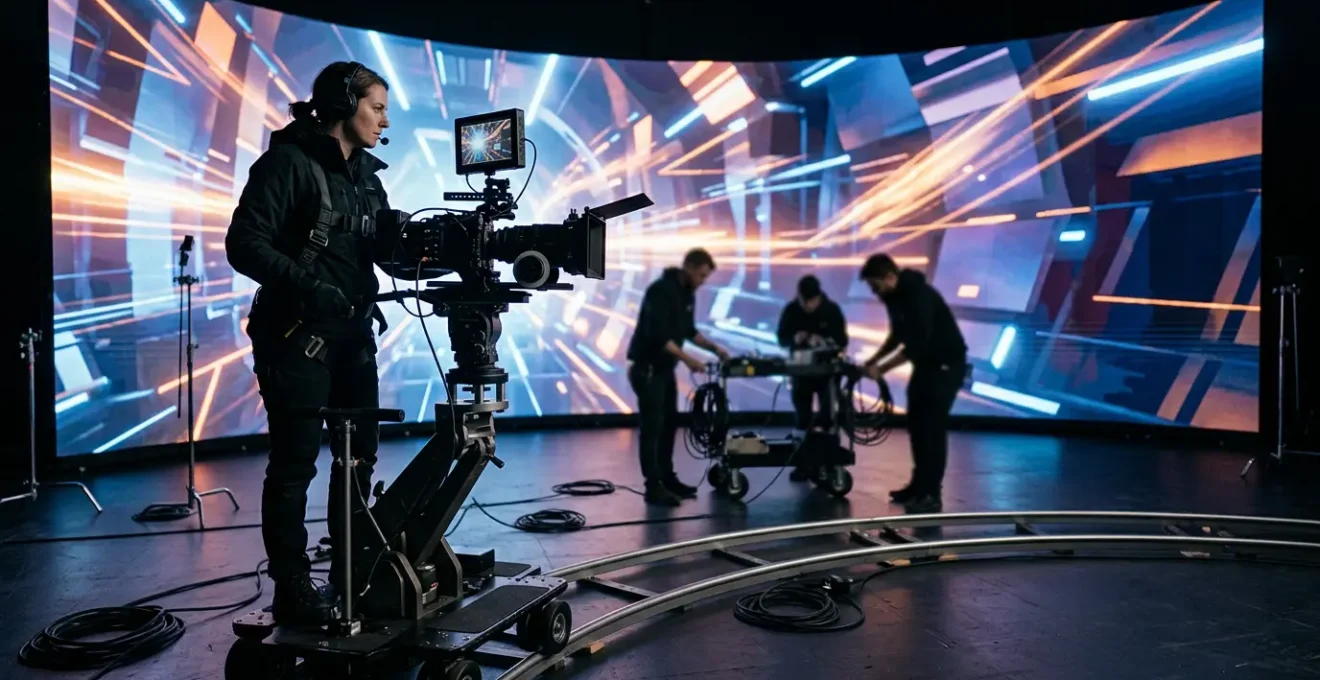
The choice between virtual production and green screen is not a tech spec comparison; it’s a commitment to two fundamentally different production philosophies.
- LED volumes front-load costs and creative decisions into pre-production for real-time, in-camera results and faster on-set iteration.
- Green screen offers maximum flexibility in post-production but defers critical creative and technical challenges, often leading to hidden costs and delays.
Recommendation: Evaluate your team’s agility, pre-production capacity, and project timeline first. Choose the workflow that aligns with your operational reality, not just the technology that looks best on paper.
For any production company crafting a sci-fi ad, the central question has shifted. It’s no longer *if* you can create stunning otherworldly visuals, but *how* you do it efficiently. The debate often boils down to two heavyweight contenders: the established, flexible world of the green screen versus the immersive, in-camera power of the LED volume. Many discussions get stuck on a simplistic comparison of day rates versus post-production hours, a metric that misses the bigger picture entirely. This approach treats them as interchangeable tools, like choosing between two different cameras.
The common wisdom suggests green screen is for control and LED volumes are for realism, but this barely scratches the surface. The decision impacts everything from actor performance and lighting design to the very structure of your production timeline and the potential for unforeseen costs. It’s a choice that dictates where you invest your team’s time, where creative decisions are locked in, and ultimately, what kind of final product you can deliver within a tight commercial deadline.
But what if the true measure of ROI isn’t just about saving money in post? The real paradigm shift lies in understanding this as a choice between two distinct production philosophies. One is a linear, sequential process where problems are solved downstream (« fix it in post »). The other is an iterative, front-loaded model where the final image is built live on set (« get it in camera »). This changes the entire dynamic of the creative process.
This article will dissect the operational and financial implications of each approach from a technologist’s perspective. We will move beyond the surface-level debate to analyze how each technology influences reflections and lighting, asset optimization workflows, technical pitfalls like moiré, and ultimately, how to align your choice with your brand’s specific aesthetic and narrative goals to achieve the best possible return on investment.
To navigate this complex decision, it’s essential to understand the specific strengths and challenges each technology presents. This guide breaks down the core components you need to evaluate, providing a clear framework for choosing the right path for your next sci-fi project.
Table of Contents: A Guide to Virtual Production vs. Green Screen ROI
- Why LED Volumes Create More Realistic Reflections Than Green Screen?
- How to Optimize Unreal Engine Assets for Real-Time Playback?
- Unreal or Unity: Which Engine Dominates the Film Production Market?
- The LED Pitch Mistake That Causes Moiré Patterns on Camera
- When to Start Building the 3D World: Pre-Production or Post?
- Local Render Farm or Cloud Rendering: Which is Cheaper for One-Off Projects?
- Why Flat Lighting Says « Comedy » and Shadows Say « Drama »?
- Corporate Clean or Gritty Doc-Style: Which Aesthetic Fits Your Brand Story?
Why LED Volumes Create More Realistic Reflections Than Green Screen?
The most immediate and visually striking advantage of an LED volume is its ability to generate photorealistic lighting and reflections directly in-camera. With a green screen, every reflective surface—a character’s helmet, a shiny spaceship console, a puddle on the ground—becomes a complex post-production challenge. The green color spills onto these surfaces, requiring meticulous keying, rotoscoping, and the manual creation of reflection maps to simulate how the non-existent environment would interact with the objects. This process is not only time-consuming but often results in a subtle, yet perceptible, disconnect between the foreground and the computer-generated background.
An LED volume, by contrast, *is* the light source. The 3D environment displayed on the panels emits real light that naturally wraps around actors and props. This creates physically accurate soft shadows, ambient occlusion, and, most importantly, true-to-life reflections. For a sci-fi ad featuring a chrome droid or a sleek, futuristic vehicle, this is a game-changer. The intricate play of light from the virtual world is captured authentically on set, eliminating the need for a VFX artist to painstakingly recreate it later. This trend is becoming an industry standard, as by 2023, a report noted that over 70% of major Hollywood studios had incorporated LED screens into their production pipelines.

The success of this technique is not just theoretical. It has been proven on the largest scales, fundamentally changing how blockbuster visuals are made.
Case Study: The Mandalorian’s Chrome Armor
The production of The Mandalorian is a landmark example of this principle in action. With its hero clad in highly reflective Beskar armor, a traditional green screen shoot would have been a post-production nightmare. Instead, the team leveraged an LED volume. According to an analysis of the production, over 50 percent of the first season was filmed using these virtual sets. This allowed the stunning, desert-planet light to reflect realistically off the character’s armor in real-time, delivering a level of immersive realism that would have been incredibly difficult and expensive to achieve in post.
This « in-camera final » approach not only enhances visual quality but also allows the Director of Photography and director to make creative lighting decisions on the fly, seeing the immediate result on the monitor. It transforms lighting from a technical cleanup job in post-production into an interactive, creative process on set.
How to Optimize Unreal Engine Assets for Real-Time Playback?
The magic of an LED volume—its ability to render complex sci-fi worlds in real-time—is entirely dependent on the quality and optimization of the 3D assets loaded into the game engine. Unlike traditional VFX for film, where render times can be measured in hours per frame, virtual production demands that assets render at a minimum of 24 frames per second without any lag, stutter, or visual artifacts. This places an enormous burden on the pre-production phase. Your 3D world must be built not just for beauty, but for blistering performance.
Optimization is a multi-faceted process. It starts with establishing strict technical guidelines for your 3D artists. Key considerations include polygon count, texture resolution, and the efficient use of materials. Hero assets, which will be seen up close, can afford more detail, but background elements must be ruthlessly optimized. This involves creating multiple Levels of Detail (LODs) for a single asset—a high-poly version for close-ups and several lower-poly versions that the engine automatically swaps in as the object moves further from the camera. This technique is crucial for maintaining a high frame rate without sacrificing visual fidelity where it matters most.
The seamless integration of these assets into the on-set workflow is what truly defines the success of a virtual production. As one industry resource notes, the process becomes collaborative and immediate.
Real-time 3D artists are on-set with the director, actors, and crew during principal photography and can make real-time adjustments to the digital world rather than waiting for post-production.
– CG Spectrum, Virtual Production LED Wall vs. Green Screen comparison
This on-set iteration is only possible if assets are built for performance from the ground up. A poorly optimized asset can bring the entire system to a halt, wasting valuable time on a shoot day. Therefore, a rigorous hand-off and review process between the art department and the virtual production team is non-negotiable.
Your Pre-Flight Checklist: Optimizing Assets for Real-Time
- Asset Naming: Ensure all 3D models follow a strict and consistent naming convention with no spaces or special characters to prevent errors during import and scripting.
- Texture Formatting: Export all textures in the correct, engine-friendly format, such as .exr for high dynamic range information or .tga for standard textures, to ensure proper interpretation by Unreal Engine.
- Pivot Point Placement: Set the pivot point for each asset at a logical location (e.g., at the base for objects that sit on the ground) to make on-set transformation and animation intuitive for the operators.
- LOD Creation: For any asset that might be seen at varying distances, create at least 3-4 Levels of Detail (LODs) to allow the engine to automatically manage performance.
- Polygon Budgeting: Optimize the polygon count of every asset based on its intended distance from the camera as defined in the shot list, allocating the « poly budget » to what will actually be visible to the audience.
Unreal or Unity: Which Engine Dominates the Film Production Market?
Once you commit to a real-time workflow, the next critical decision is the engine that will power your 3D world. While numerous game engines exist, the professional virtual production landscape for film and advertising is overwhelmingly dominated by two main players: Epic Games’ Unreal Engine and Unity. Both are incredibly powerful tools, but they have evolved with different philosophies and toolsets, leading to distinct advantages depending on the application.
For high-fidelity, photorealistic cinematic content—the kind typically required for a sci-fi ad—Unreal Engine has established itself as the de facto industry standard. Its development has been heavily geared towards filmmakers, with integrated tools like the Sequencer, which provides a non-linear editing (NLE) style timeline for creating cinematic shots, and direct access to the Quixel Megascans library, a massive collection of photorealistic 3D assets. High-profile projects have cemented its position. As one analysis points out, productions like The Mandalorian and 1899 have created a powerful « ecosystem lock-in, » meaning the talent pool, third-party plugins, and support infrastructure are now heavily concentrated around Unreal Engine for cinematic work.
Unity, on the other hand, holds a strong position in the interactive, AR/VR, and mobile gaming markets. Its asset pipeline is often considered more lightweight and flexible, and its broader developer community is vast. While perfectly capable of producing beautiful visuals, its core toolset has historically been less focused on the specific linear narrative needs of filmmakers. A production company might choose Unity if their sci-fi ad has an accompanying AR component or if their existing talent pool is primarily Unity-based.
The choice of engine is therefore less about which is « better » and more about which ecosystem is better suited to the specific project and the available creative talent. For a production company aiming for blockbuster-level visuals in a sci-fi commercial, the path of least resistance and greatest support currently leads to Unreal Engine.
| Feature | Unreal Engine | Unity |
|---|---|---|
| Primary Use in Film | High-budget productions, photorealistic environments | AR/VR experiences, mobile adaptations |
| Key Tools | Sequencer (NLE-style editing), Quixel Megascans | Timeline, lighter asset pipeline |
| Industry Adoption | Dominant in virtual production (The Mandalorian, 1899) | Strong in interactive/AR applications |
| Talent Pool | Large specialized cinematic artist community | Broader game development community |
The LED Pitch Mistake That Causes Moiré Patterns on Camera
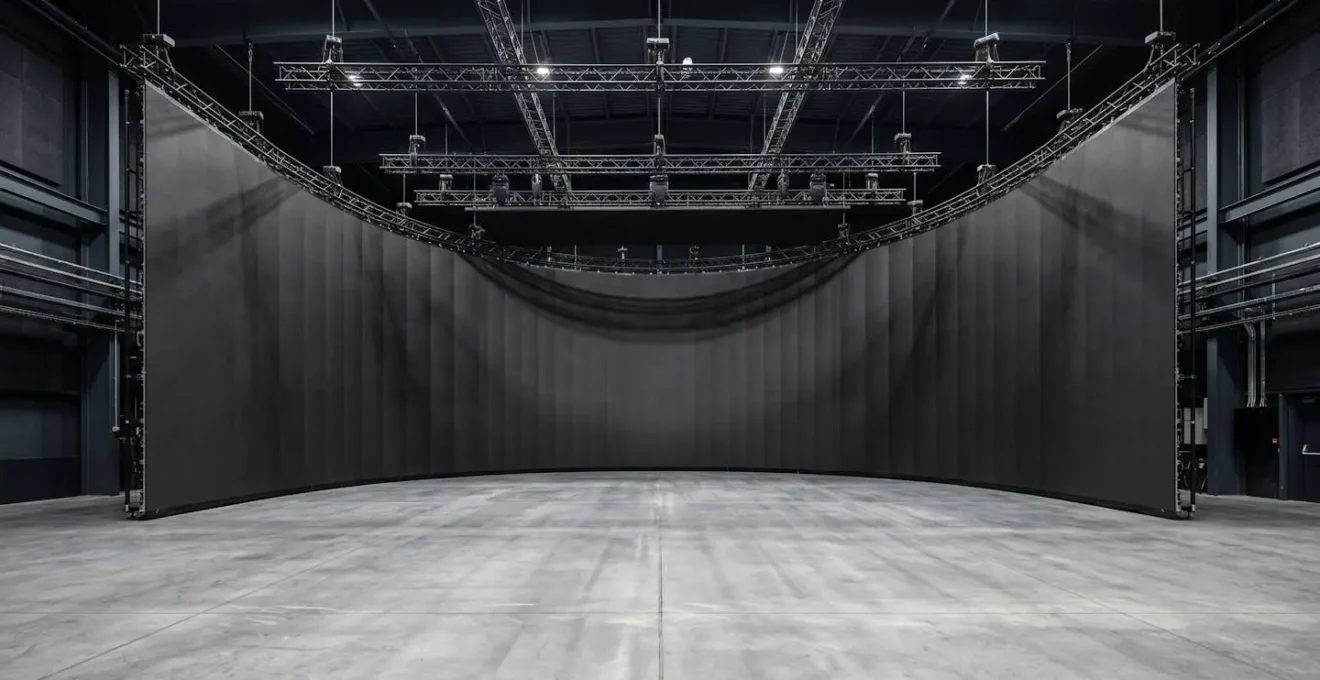
Committing to an LED volume brings immense creative benefits, but it also introduces unique technical challenges that simply don’t exist with green screen. The most notorious of these is the moiré effect. This is an undesirable visual pattern that occurs when the fine, repeating grid of the LED panel’s pixels interferes with the grid of the camera’s sensor. The result is a distracting, wavy, rainbow-like pattern that can render a shot completely unusable. The primary cause of moiré is a mismatch between the LED panel’s pixel pitch and the camera’s distance and focal length.
Pixel pitch is the distance in millimeters between the center of one pixel and the center of the next. A smaller pitch (e.g., 1.5mm) means pixels are closer together, creating a higher-resolution screen that can be filmed from a closer distance without the grid becoming visible. A larger pitch (e.g., 3.9mm) is less expensive but requires the camera to be much farther away. A common mistake is choosing a panel with a pixel pitch that is too large for the planned shots, forcing the camera into a moiré-inducing proximity. To avoid this, a simple guideline is the industry’s Rule of 2x Pitch, which states the minimum camera distance should be roughly double the pixel pitch in meters (e.g., for a 2.5mm pitch, the camera should be at least 5 meters away).
While choosing the right pitch is the first line of defense, moiré can still appear due to specific lens choices or camera angles. Fortunately, experienced on-set crews have a toolkit of strategies to combat it in real-time. These aren’t « fix it in post » solutions; they are immediate, practical adjustments made during the shoot:
- Slight Defocus: Applying a very gentle defocus to the background in the game engine can soften the pixel grid just enough to break up the pattern.
- Camera Adjustments: Fine-tuning the camera’s frequency or shutter angle can sometimes disrupt the interference pattern between the sensor and the screen.
- Optical Diffusion: Placing a light diffusion filter in front of the lens can also help to soften the image and mitigate moiré.
- Angle and Position Changes: Sometimes, a minor adjustment of the camera’s angle or a slight pan or dolly move is all it takes to eliminate the pattern.
Understanding these potential issues and their solutions is crucial for any producer. It highlights that while virtual production solves many post-production problems, it creates a new set of on-set technical challenges that require specialized expertise.
When to Start Building the 3D World: Pre-Production or Post?
The question of when to begin building the digital environment lies at the very heart of the philosophical divide between green screen and virtual production. With a traditional green screen workflow, the « world building » is fundamentally a post-production task. On set, the green screen acts as a blank canvas. The director and DP compose their shots with placeholders and creative imagination, but the final environment is created, lit, and integrated weeks or months after the shoot has wrapped. This offers maximum flexibility—the background can be changed completely late in the game—but it defers all the creative and technical integration challenges to the end of the process.
Virtual production inverts this model entirely. The 3D world must be substantially complete *before* the first day of principal photography. This is the essence of the « front-loaded » workflow. The pre-production phase is no longer just for storyboarding and location scouting; it becomes an intensive period of digital asset creation and optimization. This requires a significant upfront investment of time and budget. The entire sci-fi environment, from the texture of alien rock formations to the flicker of a futuristic cityscape, must be built, tested, and optimized for real-time performance well in advance.
This early commitment can feel daunting, but it’s the key to unlocking the ROI of virtual production. By finalizing the world beforehand, creative decisions are made with full knowledge of the final scene. The director can block actors, the DP can design lighting, and the whole crew can react to a tangible environment, not a green void. As experts on hybrid production workflows emphasize, this planning is non-negotiable.
Pre-production played a pivotal role in the hybrid approach’s success. Extensive planning and scene optimization enabled a smooth transition between the two technologies.
– Starting Pixel, Hybrid Virtual Productions Analysis
For a production company, this means reallocating resources. The budget and personnel typically reserved for a heavy post-production phase must be moved into an expanded and highly technical pre-production and on-set team. The decision to « go virtual » is therefore a commitment to building your final pixels before you even roll the camera.
Local Render Farm or Cloud Rendering: Which is Cheaper for One-Off Projects?
The cost analysis of green screen versus virtual production extends beyond the shoot day into the complex world of rendering. This is where the final pixels of your sci-fi world are computed, and the financial models are starkly different. For a traditional green screen project, the heavy lifting happens in post-production, typically requiring a render farm—a powerful cluster of computers that processes the final images. For a one-off ad campaign, building a local render farm is rarely cost-effective, so companies turn to cloud rendering services.
Cloud rendering operates on a pay-as-you-go model. You upload your 3D scenes and pay per frame or per hour of processing time. This offers immense flexibility and power without a large capital investment. However, costs can be unpredictable. A small change requested by the client can necessitate re-rendering entire sequences, leading to escalating fees. Data transfer costs for uploading and downloading heavy 4K or 8K files can also add up. This model is ideal for projects that prioritize maximum flexibility in post, but it carries the risk of budget overruns if significant changes are required.
Virtual production, on the other hand, does its « rendering » in real-time on set. The cost is bundled into the LED volume’s day rate, which includes the powerful hardware and the specialized technicians required to run it. While this day rate is significantly higher than a standard studio rental—for comparison, a simple green screen studio hire in London starting under £1,000 per day is common—it replaces the vast majority of backend rendering costs. The turnaround for changes is instant, happening live on set. This model front-loads the cost but provides budgetary certainty. Once the shoot is done, the visuals are 90% final, eliminating the risk of expensive re-renders in post.
For a one-off sci-fi ad with a tight deadline, the real-time model offers a compelling ROI through speed and cost predictability, whereas the cloud rendering model offers creative latitude at the price of potential budget and schedule volatility.
| Factor | Cloud Rendering (Post) | Real-Time VP (On-Set) |
|---|---|---|
| Initial Cost | Pay-per-frame pricing | LED volume day rate |
| Hidden Costs | Data transfer fees, re-renders | Pre-production optimization, technicians |
| Turnaround Time | Days to weeks for changes | Instant on-set feedback |
| Best For | Maximum post flexibility | Time-sensitive campaigns |
Why Flat Lighting Says « Comedy » and Shadows Say « Drama »?
The choice between green screen and an LED volume has profound, often overlooked, consequences on one of the most fundamental elements of cinematic storytelling: lighting. The technology you use on set directly dictates the lighting style you can achieve, which in turn communicates a specific mood and genre to the audience. High-key, flat lighting is the visual language of clarity, optimism, and often comedy. Conversely, low-key lighting with deep shadows (chiaroscuro) evokes mystery, tension, and drama.
A green screen set presents a unique lighting challenge. To achieve a clean key (the process of removing the green background), the screen itself must be lit as evenly and flatly as possible. Any shadows or hotspots on the screen will make the keying process significantly harder in post-production. This necessity often forces the Director of Photography to flood the entire set with soft, flat light. While the foreground characters can be lit separately to a degree, the ambient « fill » light required for the screen bleeds everywhere, killing contrast and making it very difficult to achieve a truly dramatic, shadowy look. This technical constraint is a key reason why many green screen-heavy productions have a slightly artificial, high-key feel.
As one production house explains, this is a fundamental limitation of the technology.
To shoot on a green screen, flat lighting is required and sometimes the crew may not even know what the background is going to look like.
– NG Production Films, How LED Volumes are the Future of Production
An LED volume, however, *is* the source of light. If the virtual environment is a dark, moody alien alleyway with a single flickering neon sign, that is exactly the light that will fall on the actors. It allows for natural, high-contrast, and deeply dramatic lighting schemes to be created in-camera. The DP can work with the virtual art department to move a virtual light source in the 3D scene and see its real-world effect on the actor’s face instantly. This gives filmmakers the ability to « paint with shadow » on set, creating the gritty, dramatic aesthetic that is often perfect for a sci-fi narrative.
Key Takeaways
- Workflow Over Tech: The real decision is between a front-loaded, in-camera workflow (LED) and a flexible, back-loaded workflow (Green Screen). Your ROI depends on which philosophy your team can execute best.
- Lighting is Story: Green screen pushes projects towards flatter, high-key lighting due to technical needs. LED volumes excel at creating natural, dramatic, low-key lighting in-camera, directly impacting the mood of your story.
- Hidden ROI in Marketing: The cutting-edge nature of an LED volume shoot offers significant secondary value through compelling behind-the-scenes content, enhancing brand perception in a way green screen shoots cannot.
Corporate Clean or Gritty Doc-Style: Which Aesthetic Fits Your Brand Story?
Ultimately, the decision between an LED volume and a green screen must serve the story and the brand. The technology is a means to an end, and the « best » choice is the one that most effectively delivers the desired aesthetic. Different brand identities call for different visual languages. A sleek, minimalist « corporate clean » look has very different technical requirements than a raw, immersive « gritty doc-style » aesthetic, and each maps better to one of the two technologies.
For a brand that wants a perfect, bright, and seamlessly controlled world—think of the clean, aspirational ads common in the tech or pharmaceutical industries—green screen often remains a superior choice. It gives post-production artists absolute control to perfect every pixel, ensure flawless product integration, and achieve a level of polished perfection that can be difficult to manage with the real-world variables of an LED volume. For this « corporate clean » style, the control of post-production outweighs the benefits of on-set realism.
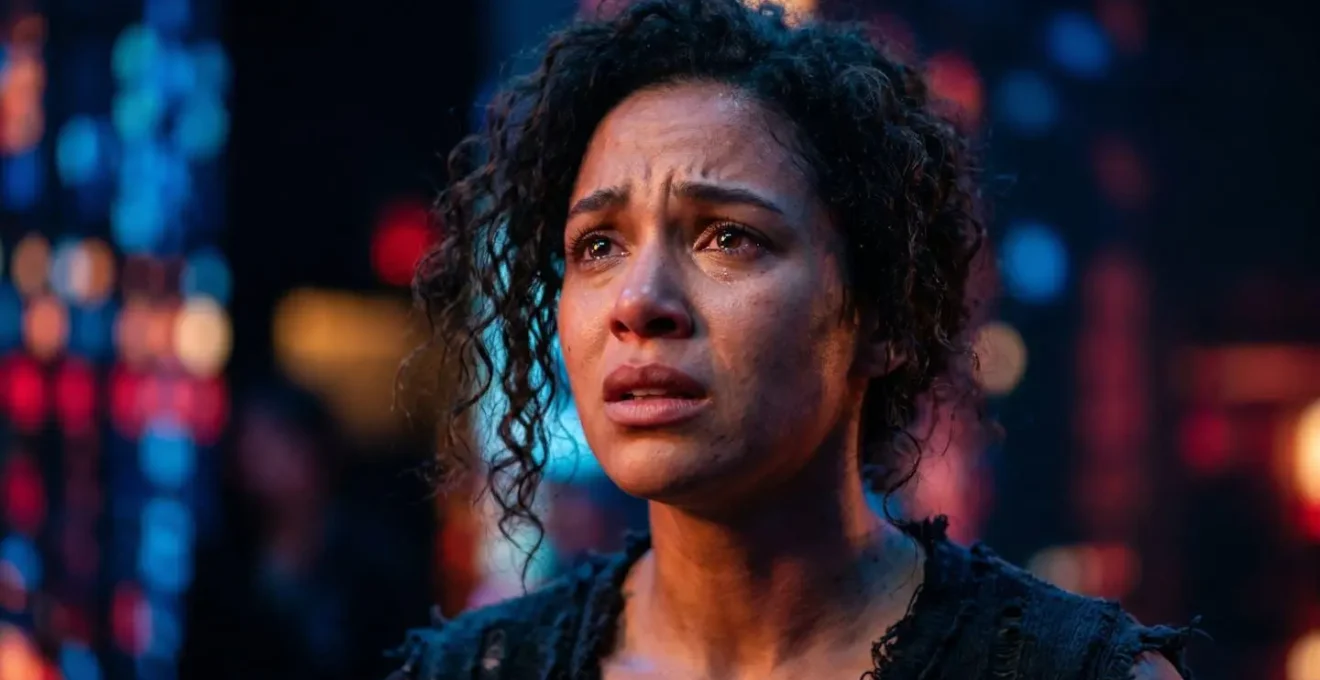
Conversely, for a brand aiming for a more cinematic, immersive, and authentic feel—the « gritty » or « doc-style » look—an LED volume is unparalleled. It excels at creating natural imperfections, realistic light falloff on actors, and a sense of tangible space that makes the audience feel like they are truly there. This is perfect for high-concept sci-fi or fantasy stories where audience immersion is paramount. Furthermore, this choice has a powerful secondary benefit for the brand story. The very act of using an LED volume is a compelling narrative in itself.
Case Study: The PR Value of Cutting-Edge Production
As noted by production experts, major film and TV productions have discovered that shooting on an LED volume generates significant PR and marketing value. The « making-of » footage is visually spectacular and showcases the brand’s commitment to innovation. For a sci-fi ad, this behind-the-scenes content can become a secondary marketing campaign, demonstrating technological leadership and adding a layer of excitement that a standard green screen shoot simply cannot provide. This « PR ROI » is a crucial, if often un-budgeted, advantage.
To determine the right path for your next campaign, the next logical step is to analyze your creative brief against these workflow philosophies and technological capabilities. The correct choice will unlock not only financial ROI but also a more powerful and resonant final story.