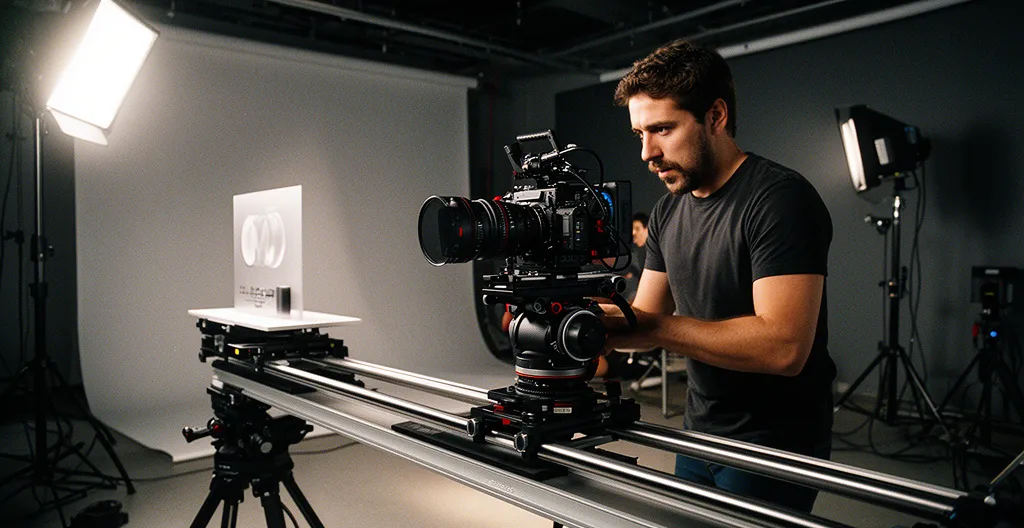
Camera movement is your silent script; its true power lies in the psychological subtext it creates, not just the physical motion itself.
- Intentional moves like the Vertigo effect or parallax slides manipulate the viewer’s sense of space and emotion to tell a story.
- The choice between handheld and tripod isn’t about stability, but about aligning with a core narrative identity (intimacy vs. authority).
Recommendation: Master this ‘kinetic grammar’ to reveal character, build tension, and guide audience emotion with surgical precision.
Every director has faced it: a scene that feels static, an emotion that doesn’t quite land, a piece of information that has to be bluntly stated through dialogue. We are often taught a basic vocabulary of camera moves—a push-in for emphasis, a tracking shot to follow action. But this approach treats the camera as a mere recorder, capturing events as they happen. It overlooks the profound potential of movement as a narrative tool in its own right, a form of non-verbal dialogue that can shape a viewer’s entire perception of a scene.
The true art of visual storytelling lies in understanding the psychological grammar of motion. Why does one movement create intimacy while another instills dread? How can the speed and trajectory of the camera reveal a character’s internal state more effectively than any line of dialogue? This is where the craft elevates to an art form. The key is not simply moving the camera, but moving the audience’s emotions through a carefully orchestrated spatial narrative. It’s about creating a kinetic empathy, where the viewer feels the story through the camera’s eye.
But what if the real secret wasn’t in adding more movement, but in making every movement profoundly intentional? This guide deconstructs that grammar. We will move beyond the « what » of camera techniques and dive deep into the « why, » exploring how specific movements can be used to reveal information, build worlds, and stir emotions, all without a single word being spoken. We’ll examine how to turn a simple slide into a revelation and how to choose an aesthetic that amplifies your core message, transforming your camera from a passive observer into an active storyteller.
This exploration will break down the techniques and psychological principles behind powerful visual storytelling. The following sections provide a complete roadmap, from creating unease with specific effects to aligning your visual style with your narrative’s soul.
Summary: A Deep Dive into the Language of Cinematic Motion
- Why the « Vertigo Effect » Creates Instant Unease in the Viewer?
- How to Slide Parallax shots to Make Small Rooms Look Bigger?
- Handheld or Tripod: Which Movement Fits a Testimonial Video?
- The Constant Motion Mistake That Makes Viewers Motion Sick
- How to Fly a Drone smoothly for « Cinematic » Reveals?
- How to Plan a Match Cut During Filming for Perfect Execution?
- Why Flat Lighting Says « Comedy » and Shadows Say « Drama »?
- Corporate Clean or Gritty Doc-Style: Which Aesthetic Fits Your Brand Story?
Why the « Vertigo Effect » Creates Instant Unease in the Viewer?
The « Vertigo effect, » or dolly zoom, is a masterclass in psychological manipulation through visuals. Its power to create unease stems from its ability to weaponize visual dissonance. In our everyday experience, as we move closer to an object, our field of view narrows, and the background seems to get further away. The dolly zoom shatters this fundamental rule of perception. By dollying the camera towards or away from a subject while simultaneously zooming the lens in the opposite direction, it keeps the subject the same size in the frame while the background appears to warp—either compressing dramatically or expanding unnervingly.
This visual contradiction triggers a primal sense of disorientation in the viewer. The brain sees something it knows is physically impossible, creating a subconscious feeling that something is profoundly wrong. It’s a visual representation of a character’s internal crisis, a sudden, sickening realization, or a moment of existential dread. You’re not just watching the character feel uneasy; the kinetic grammar of the shot forces you to experience that unease directly. It’s a powerful tool for externalizing an internal emotional state without a word of dialogue.
Achieving this profound unease requires technical precision, but it can be simulated effectively in post-production. The key is to create that impossible visual paradox that speaks directly to the audience’s subconscious. The effect is most potent when used sparingly, reserved for a pivotal moment where you need to break the reality of the scene to plunge the viewer into a character’s distorted state of mind.
How to Slide Parallax shots to Make Small Rooms Look Bigger?
The parallax effect is a subtle yet powerful technique for creating a sense of depth and scale, even in confined spaces. It works by creating relative motion between different visual layers. As the camera slides laterally, foreground objects move across the frame faster than background objects. This motion differential is how our own eyes perceive depth in the real world. By exaggerating it with a camera slider or jib, you can trick the viewer’s brain into perceiving more distance between layers than actually exists, effectively making a small room feel significantly larger and more dynamic.
To maximize this effect, you must think like a stage designer, composing your shot in distinct planes: foreground, midground, and background. A foreground element—a desk lamp, a plant, a door frame—is crucial. As the camera slides past it, this element’s rapid movement creates a strong sense of three-dimensionality. The subject in the midground remains the focus, while the background moves most slowly, establishing the « deepest » layer of the space. This technique turns a flat, static frame into a living diorama, where information is revealed as the camera glides through the environment.
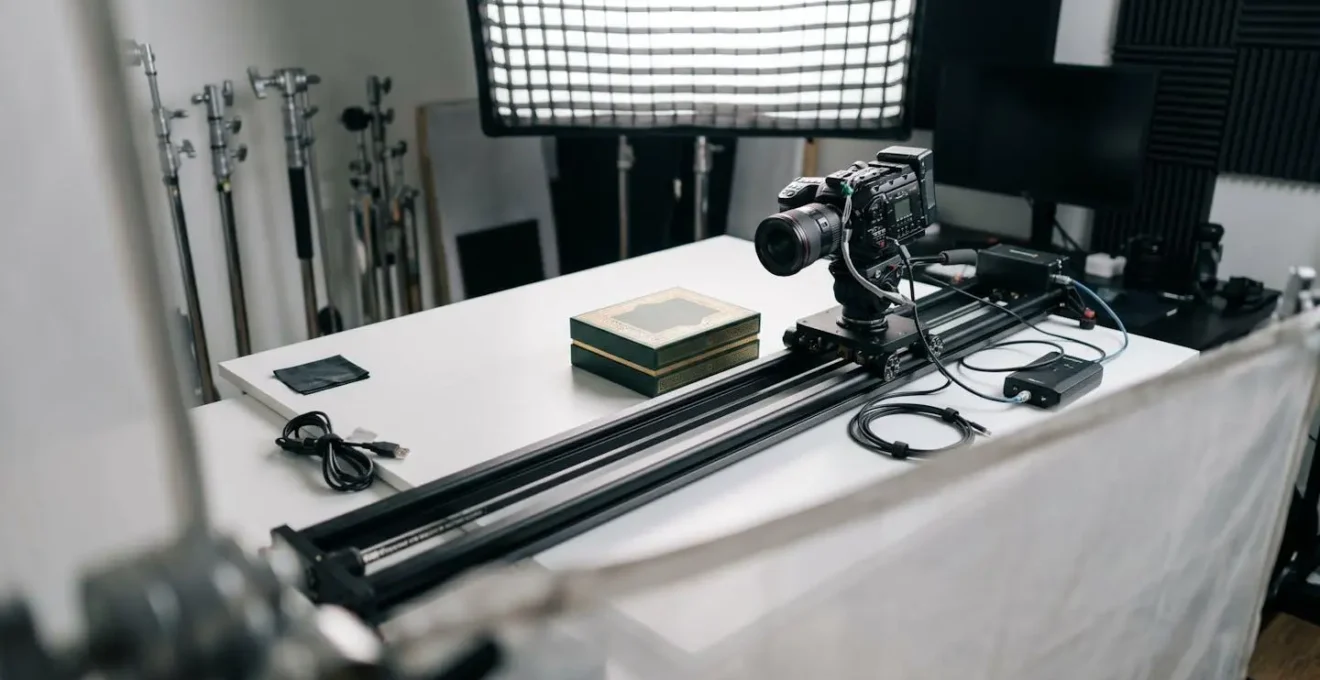
This layered visual approach is incredibly effective for adding production value. As noted in research on parallax design effectiveness, the use of layered visual effects is proven to enhance engagement through interactive storytelling. While this often refers to web design, the psychological principle is universal. A smooth slide that reveals a product or peeks around a corner feels premium and intentional. It tells a micro-story through spatial depth, guiding the viewer’s eye and making the environment an active participant in the narrative.
Your Roadmap: A Practical Parallax Implementation Guide
- Layer the Shot Strategically: Before filming, meticulously plan your foreground, midground, and background elements. Think about what each layer reveals as the camera moves, creating a small narrative arc through the motion itself.
- Utilize a Jib Arm: For vertical parallax, a jib arm is invaluable. As the arm moves up or down, keep the subject centered. This creates a powerful sense of depth and scale while maintaining focus on the crucial element in the frame.
- Master the Reveal: Start with a wide shot where the main subject might be partially obscured. Use a smooth, controlled slide forward to move past foreground elements and reveal the product or subject, giving it a cinematic entrance.
Handheld or Tripod: Which Movement Fits a Testimonial Video?
The choice between handheld and tripod for a testimonial video is not merely a technical one; it is a fundamental decision about your brand’s voice and the emotional contract you wish to establish with your audience. A locked-down tripod shot communicates stability, authority, and control. The frame is an unshakable window into the subject’s world, forcing the viewer’s attention onto the words and emotions being shared. This lack of movement creates a sense of formality and objectivity, which is ideal for brands that want to be perceived as wise, trustworthy, and established—The Sage archetype.
Conversely, handheld movement introduces a human element. The subtle, breathing motion of a well-executed handheld shot creates a feeling of intimacy and immediacy. It suggests you are in the room with the speaker, experiencing their story firsthand. This technique is perfect for The Caregiver or The Explorer archetypes, where connection, empathy, and authenticity are paramount. A grittier, more dynamic handheld style can even convey the disruptive energy of a Rebel startup, signaling innovation and a break from convention. It feels raw, real, and unfiltered.
Ultimately, the decision must be driven by narrative intent. The goal is to choose the style that best serves the story being told and the brand persona it represents. As filmmaking analysis shows, camera movement is key to shaping perspective and building an emotional arc. A smooth push-in on a gimbal, for example, can draw viewers into the emotional state of a character, blending the professionalism of a stable shot with the intimacy of proximity. The right movement makes the testimonial feel less like a performance and more like a privileged conversation.
This comparative table offers a clear framework for aligning your camera style with your brand’s core identity to maximize psychological impact.
| Brand Archetype | Camera Style | Movement Type | Psychological Impact |
|---|---|---|---|
| The Sage (Financial) | Locked Tripod | Static shots | Focus audience attention on action/emotions within frame without distraction |
| The Caregiver (Healthcare) | Subtle Handheld | Breathing motion | Creates intimacy and human connection |
| The Rebel (Startup) | Grittier Handheld | Dynamic movement | Conveys energy and disruption |
| Premium Brands | Gimbal/Stabilizer | Smooth push-in | Draws viewers into emotional state of character |
The Constant Motion Mistake That Makes Viewers Motion Sick
In the quest for « cinematic » footage, one of the most common mistakes is constant, unmotivated movement. An endless sequence of slides, pans, and orbits without a clear narrative purpose doesn’t add dynamism; it creates visual noise. This aimless motion can be physically disorienting for the viewer, leading to a subtle form of motion sickness. More importantly, it breaks their immersion. When the camera moves without reason, the audience becomes aware of the technique. They stop watching the story and start watching the camerawork, which is a cardinal sin of storytelling.
Every camera movement must have an intention. Is it revealing new information? Is it tracking a character’s journey? Is it mimicking a character’s perspective or emotional state? If you cannot answer « why » the camera is moving, it should be static. A static shot is not boring; it is a deliberate choice. It provides a moment of stability, allowing the audience to focus entirely on the performance, the composition, or a critical line of dialogue. Overuse of movement devalues its impact. When everything moves, nothing feels significant.
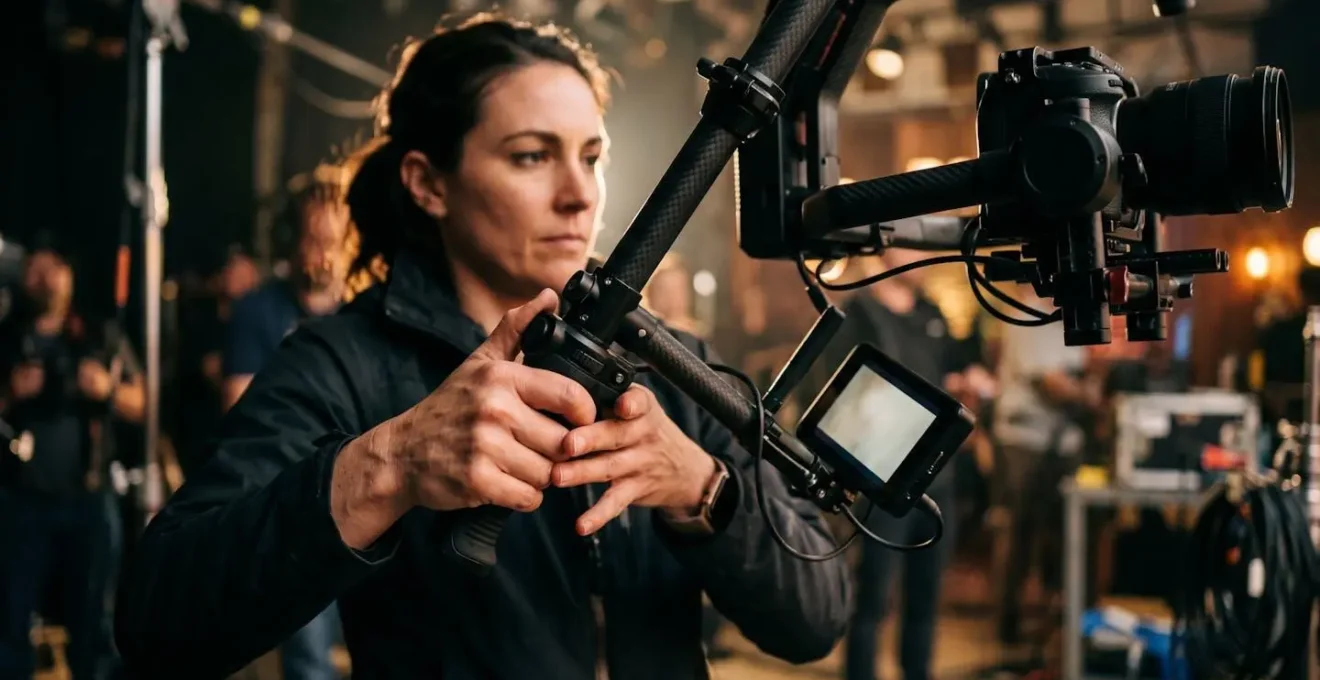
The goal is to make the movement so natural and motivated that it becomes invisible, serving the story rather than distracting from it. This is why professional stabilizers and gimbals are so crucial; they ensure that when you do choose to move, the motion is smooth and controlled. This lack of intentionality is a key reason for audience disengagement. In fact, video analytics research reveals that viewer attention drops off significantly as a video progresses, and jarring, unmotivated movement only accelerates this decline.
Movement Audit Checklist for Editors
- Justify the Motion: Ask yourself, « Why is the camera moving here? » Intentional moves should reveal information, create parallax, or help the viewer feel the rhythm of the scene.
- Match Movement to Emotion: Does the speed and style of the movement align with the intended emotion? Slower is for calm or intimacy; faster is for energy or surprise.
- Strive for Invisibility: Is the movement smooth enough that people notice the story, not the camera? The technique should feel natural and serve the content.
- Consider Stillness: Could this moment be more powerful as a static shot? Sometimes, the most impactful choice is to deliberately keep the camera still for emphasis.
How to Fly a Drone smoothly for « Cinematic » Reveals?
Achieving « cinematic » drone footage is less about the drone itself and more about the pilot’s intentionality. The sweeping, epic shots we associate with high-end productions are born from smooth, deliberate, and motivated flight paths. The number one rule for smooth reveals is to fly the drone in one direction at a time. Avoid mixing inputs—don’t ascend while also panning and flying forward. This « joystick soup » results in jerky, amateurish footage. Instead, practice clean, singular movements: a simple, slow push-in; a graceful lateral reveal; or a steady ascent (or « crane up »).
The second key is to use objects in the environment to create parallax and reveal information. A cinematic reveal isn’t just flying over a landscape; it’s flying past a foreground element (like a tree or a building corner) to reveal the subject behind it. This technique, known as « parallax reveal, » adds a layer of discovery and depth to the shot. The drone starts by showing one thing, and the movement uncovers something new and more important. This transforms a simple fly-by into a narrative moment.
Finally, control your speed. Cinematic motion is almost always slower than you think. Set your drone’s control sensitivity (or « expo » settings) to be less responsive, allowing for finer, more gradual adjustments. A slow, steady crawl over a landscape or towards a subject feels majestic and controlled. Drones have truly revolutionized the industry by making these perspectives accessible. As noted in video production case studies, their ability to capture breathtaking sweeping motions was once exclusive to helicopter crews, but now this powerful storytelling tool is widely available, making smooth, intentional flight paths a defining skill for modern directors.
How to Plan a Match Cut During Filming for Perfect Execution?
A match cut is one of the most elegant transitions in the filmmaker’s toolkit, connecting two different scenes by matching either the action, composition, or graphic elements between them. Its purpose is to create a seamless bridge of logic or metaphor in the viewer’s mind. The legendary cut in *2001: A Space Odyssey* from a bone to a satellite is a perfect example, linking the dawn of man’s tools to the future of technology. For perfect execution, a match cut cannot be an afterthought in post-production; it must be meticulously planned during filming.
The first step is meticulous storyboarding. You must visualize both Shot A (the outgoing shot) and Shot B (the incoming shot) side-by-side. Pay close attention to the exact composition, the position of the key object or character in the frame, and the direction of movement. For example, if you’re cutting from a spinning roulette wheel to the spinning tire of a getaway car, you need to ensure both are framed similarly, spinning at a comparable speed, and occupying the same screen space. Take reference stills on set from Shot A to bring with you when you film Shot B, even if it’s days or weeks later.
This level of planning is crucial because match cuts are a powerful tool for clarity. They help the audience make connections, understand the passage of time, or grasp a thematic link. This focus on clarity is paramount in visual media. It is why research demonstrates that 96% of marketers agree videos help increase users’ understanding of a product or service. A well-executed match cut is a sophisticated form of that principle, using visual poetry to enhance comprehension and create a moment of satisfying insight for the viewer. As highlighted in guides to cinematic techniques, a solid foundation in storyboarding is the bedrock for conveying your vision with precision and impact.
Why Flat Lighting Says « Comedy » and Shadows Say « Drama »?
Lighting is the emotional paintbrush of a film. The distinction between « comedy » and « drama » lighting boils down to one core element: contrast. Flat, high-key lighting minimizes shadows across the frame. Everything is bright, clear, and evenly illuminated. This visual style has a specific psychological effect: it communicates safety, openness, and a lack of hidden threats. In a brightly lit world, there are no dark corners where danger can lurk. This sense of security allows the audience to relax and be more receptive to humor. It’s the visual language of sitcoms and lighthearted comedies—everything is visible, and therefore, nothing is truly threatening.
Dramatic lighting, or low-key lighting, does the exact opposite. It thrives on high contrast, deep shadows, and sculpted light. Techniques like Rembrandt lighting, where one side of the face is lit and the other falls into shadow with a tell-tale triangle of light on the cheek, create a sense of mystery, tension, and psychological depth. Shadows conceal information, forcing the viewer to question what might be hidden. This uncertainty is the very essence of drama and suspense. It suggests a world of complexity and ambiguity, where characters have hidden motives and the environment itself can be menacing.
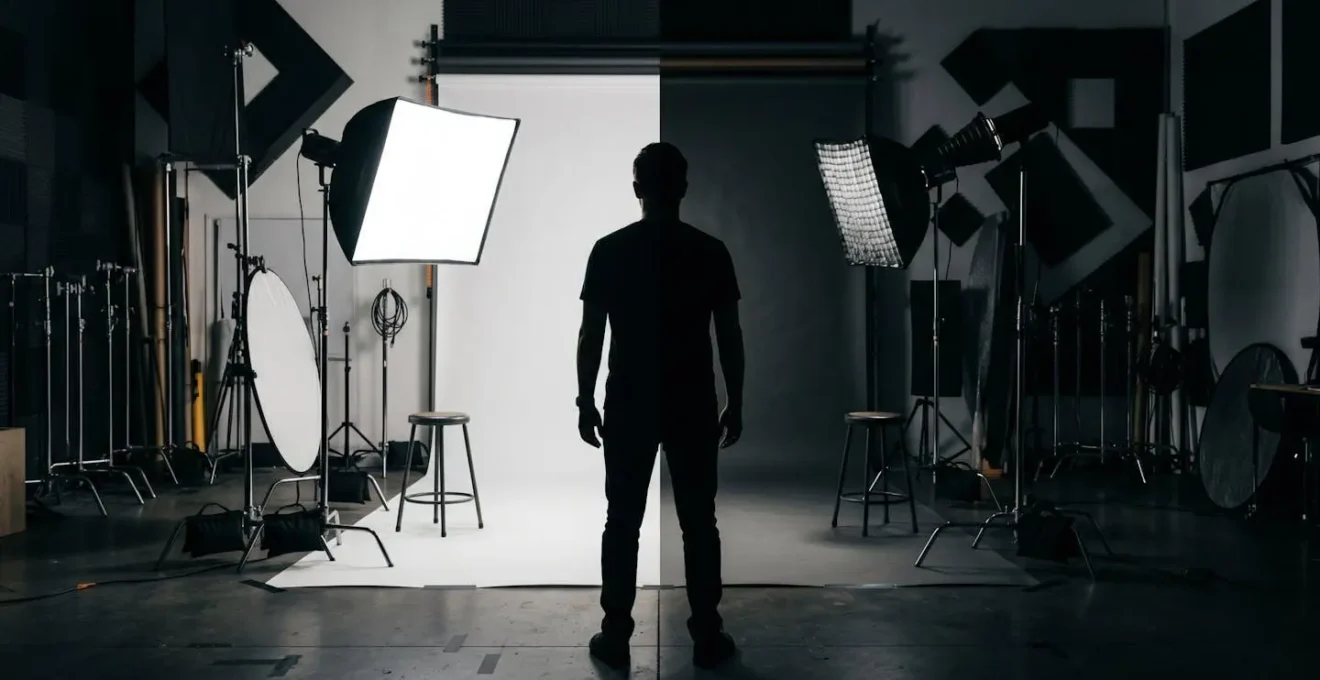
This psychological association is deeply ingrained. We associate light with knowledge and safety, and darkness with the unknown and danger. A director can use this shorthand to instantly set the emotional tone of a scene. By simply choosing to eliminate or embrace shadows, you are telling the audience how to feel before any action takes place. As filmmaking fundamentals explain, camera and lighting choices can be used to set an emotional context, imitating a character’s viewpoint to convey feelings like fear or chaos. An « approachable expert » in a corporate video, for instance, will be lit with soft, balanced light to appear trustworthy, while a villain in a thriller will be cloaked in shadow to signal their duplicity.
Key takeaways
- Camera movement is a psychological tool first and a technical one second; every motion must have a clear narrative « why. »
- The choice of visual aesthetic (e.g., corporate clean vs. gritty doc-style) is a core narrative decision that must align with the brand’s identity.
- Intentionality is everything. Unmotivated or excessive movement breaks immersion and alienates the viewer, while purposeful stillness can be intensely powerful.
Corporate Clean or Gritty Doc-Style: Which Aesthetic Fits Your Brand Story?
Having explored the psychological impact of individual movements and lighting, the final piece of the puzzle is to synthesize these elements into a cohesive visual identity. The choice between a « Corporate Clean » aesthetic and a « Gritty Doc-Style » is a defining one, and it must be driven by your brand’s core story. The clean look, characterized by polished, stable shots, controlled lighting, and smooth camera moves, signals stability, authority, and resources. It’s the language of established banks, tech giants, and premium brands—The Ruler or The Sage archetypes. This style says, « We are in control, we are trustworthy, and we have the resources to deliver perfection. »
The gritty doc-style, in contrast, embraces imperfection to build an immediate sense of authenticity. It uses handheld cameras, available light, and even lens flares to create a feeling of being « in the moment. » This aesthetic builds instant rapport and feels ‘real,’ making it perfect for The Rebel or The Explorer brands—craft breweries, adventure gear companies, or disruptive startups. It communicates agility, passion, and an unvarnished truth, suggesting a brand that is transparent and connected to its community. A modern hybrid, the « elevated doc-style, » blends the best of both, using smooth gimbal moves for a cinematic feel while retaining the authentic energy of handheld work.
Choosing the right aesthetic is not about which looks « better, » but which one rings truest to your brand’s narrative and resonates with your target audience. This alignment is critical for engagement and conversion. Indeed, recent video marketing data confirms that incorporating video can increase landing page conversion rates by up to 86%. This remarkable effectiveness is unlocked when the visual language speaks the same truth as the brand’s message. An misaligned aesthetic creates a disconnect that viewers can feel instantly, undermining the trust you seek to build.
This framework provides a clear guide for making that crucial decision, ensuring your visual style is an authentic extension of your brand’s soul.
| Brand Type | Aesthetic Style | Camera Techniques | Audience Impact |
|---|---|---|---|
| The Ruler/Sage (Banks, Tech) | Corporate Clean | Polished, stable shots, controlled lighting | Signals stability and resources |
| The Rebel/Explorer (Craft, Adventure) | Gritty Doc-Style | Handheld, available light, lens-flares | Builds instant rapport, feels ‘real’ |
| Modern Hybrid Brands | Elevated Doc-Style | Smooth moves feel cinematic; aggressive moves drive energy and attention | Authenticity without sacrificing professionalism |
Now, take this framework, pick up your camera, and start writing your silent script. Tell stories that move, both literally and emotionally, and connect with your audience on a deeper, more intuitive level.