The key to an iconic audio mnemonic isn’t just a catchy tune; it’s composing a « sensory-emotional chord » that aligns perfectly with your brand’s visual and emotional identity.
- Effective audio logos are built on cognitive simplicity, using minimal notes and consonant intervals for maximum memorability.
- True sonic identity is achieved by layering unique sound effects and ensuring the final sound harmonizes with your brand’s colors, shapes, and pace.
Recommendation: Instead of searching for a stock jingle, invest in a bespoke composition process that treats your audio logo as a core strategic asset, not an afterthought.
Every brand manager dreams of it: that single, powerful sound that instantly means *you*. The three-second « bong » of Intel. The deep « ta-dum » of Netflix. These aren’t just jingles; they are assets, crystallizing a brand’s entire promise into a moment of pure audio recognition. The common advice is to keep it short, simple, and memorable. While true, this barely scratches the surface. It treats the process like finding a lucky melody rather than the strategic act of composition it truly is. Managers often focus on what the sound *is* without understanding *how* it should be built or *why* it works on a deep psychological level.
The real challenge isn’t just to be heard, but to be *felt*. The process is fraught with pitfalls, from choosing a generic library track that fails to stand out, to creating a sound that actively contradicts your carefully crafted visual identity. The disconnect between what a brand looks like and what it sounds like is a common yet critical mistake that dilutes equity and confuses customers. It’s the sonic equivalent of using the wrong brand colors in your logo.
But what if the key wasn’t simply about finding a « catchy » tune, but about deliberately composing a sensory-emotional chord? This is a more profound approach that views the audio mnemonic as a piece of micro-symphony, where melody, texture, and harmony are intentionally woven together to evoke a specific feeling. This perspective moves beyond the superficial and into the realm of true sonic architecture. This guide will walk you through this compositional mindset, revealing not just the what, but the why and the how behind creating a sound that sticks in the brain and builds lasting brand value.
This article provides a composer’s framework for building a powerful audio mnemonic. From the science of simplicity to the art of sound layering and strategic implementation, we’ll explore each crucial element of a successful sonic identity.
Summary: Composing an Audio Mnemonic for Lasting Brand Recall
- Why Simple Melodies Stick in the Brain Longer Than Complex Scores?
- How to Layer Sound Effects to Create a Unique « Audio Logo »?
- Library Jingle or Bespoke Composition: Is the Investment Worth It?
- The Sound Mistake That Contradicts Your Visual Brand Identity
- When to Play Your Sonic Logo: Start, End, or Transition?
- Sidechain Compression or Keyframes: Which Ducking Method Sounds More Natural?
- How to Write a Video Style Guide That Freelancers Actually Follow?
- Why Inconsistent Video Styles Confuse Customers and Dilute Equity?
Why Simple Melodies Stick in the Brain Longer Than Complex Scores?
The human brain is wired for efficiency. When it comes to audio, it latches onto simple, predictable patterns far more easily than intricate, complex arrangements. This is the foundational principle of a memorable audio mnemonic. A simple melody acts like a cognitive shortcut, requiring minimal mental effort to process and store. The most iconic sounds, like Intel’s five-note theme, are built on this principle. They use just a handful of notes, often within a stable, consonant interval like a perfect fifth, which our brains perceive as resolved and pleasing. This isn’t just a creative choice; it’s a strategic one rooted in psychoacoustics.
Complexity is the enemy of recall. A sprawling, operatic score might feel epic, but it gives the listener’s memory nothing to grab onto. In contrast, a two-to-five-second melody with a clear, hummable contour becomes an « earworm » that embeds itself effortlessly. The goal is not to demonstrate musical virtuosity but to create an unshakeable association. In fact, research shows that a brand’s sonic identity is a powerful driver of memory. According to one study, brands with music fitting their identity are 96% more likely to be recalled by consumers.
Consider the success story of Intel. When hired to create the sound, composer Walter Werzowa was tasked with conveying reliability, innovation, and trust. He didn’t write a symphony; he crafted a simple five-note progression. It is now so ubiquitous it’s estimated to be played somewhere in the world every five minutes. Its success lies in its stark simplicity. This demonstrates that the true power of a sonic logo isn’t in the number of notes, but in their ability to deliver an emotional message with a minimal cognitive load, making it instantly recognizable and endlessly repeatable.
How to Layer Sound Effects to Create a Unique « Audio Logo »?
While a simple melody forms the skeleton of an audio mnemonic, it’s the layers of texture and sound effects that give it a unique personality and flesh out its character. Composing an audio logo is akin to painting; the melody is the initial sketch, but the layers of sound design are the colors, shadows, and textures that create depth and emotion. This is where a brand moves from a generic jingle to a true « auditory gestalt »—a sound where the whole is far greater than the sum of its parts. These layers can include organic sounds, synthesized textures, or subtle effects that transform a simple tune into a signature asset.
The key is to ensure each layer serves a purpose in telling the brand’s story. A tech company might layer a subtle digital « swoosh » with a clean, bell-like melody to communicate innovation and clarity. A rugged outdoor brand could combine a melodic guitar pluck with the faint, textural sound of a crackling fire or a gust of wind. These textures add a subliminal narrative that a melody alone cannot convey. They build a world around the sound, making it more immersive and distinctive.
A prime example of this technique is YouTube’s « Buckle Up » sonic brand. The goal was to capture the feeling of « diving deeply into the things you love. » The final sound isn’t just a melody; it’s a microcosm of the user journey. As detailed in the project’s case study, the layers represent a portal opening to new content. This layered approach also gave the sound flexibility; it was later adapted into a recognizable variation for YouTube Shorts, proving that a well-constructed sonic DNA can be malleable while maintaining a consistent through-line. This process transforms the audio logo from a static file into a dynamic and living piece of the brand ecosystem.
Library Jingle or Bespoke Composition: Is the Investment Worth It?
One of the first major decisions a brand manager faces is whether to pull a generic jingle from a music library or to invest in a bespoke composition. The allure of library music is its low upfront cost and speed. However, this is often a false economy. A stock sound is, by its nature, non-exclusive. The same « upbeat and inspiring » track you choose could be used by a competitor, a local business, or even in a context that damages your brand by association. A bespoke composition, while a more significant initial investment, is a long-term strategic asset that appreciates in value.
A custom-composed audio logo is tailored to your brand’s unique tonal identity. The composer can work with you to translate abstract values—like « trust, » « innovation, » or « playfulness »—into concrete musical elements like key, tempo, and instrumentation. This process ensures the sound is not just catchy, but meaningful and perfectly aligned with your visual brand. Furthermore, a bespoke piece offers a crucial business advantage: it can be trademarked. This legal protection turns your sound into ownable intellectual property, preventing others from using it and solidifying its role as a unique brand identifier. The long-term ROI of a sound that is exclusively yours is substantial, with some brands seeing significant boosts in recall. For example, Tostitos reported a 38% improvement in ad recall after implementing its custom sonic logo.
The choice ultimately depends on your brand’s ambition. A short-term campaign might get by with a library track, but a brand serious about building long-term equity should view a bespoke audio logo as a non-negotiable investment. The following table breaks down the key decision factors.
| Factor | Library Music | Bespoke Composition |
|---|---|---|
| Initial Cost | $500-$5,000 | $15,000-$100,000+ |
| Exclusivity | Non-exclusive | 100% exclusive |
| Brand Alignment | Generic fit | Custom-tailored |
| ROI Timeline | 6-12 months | 12-24 months |
| Trademark Protection | Not possible | Full protection |
| Long-term Value | Depreciates | Appreciates as brand asset |
The Sound Mistake That Contradicts Your Visual Brand Identity
Perhaps the most subtle yet damaging mistake in sonic branding is creating a sound that works in isolation but clashes with the brand’s visual identity. A brand is a multisensory experience, and customers instinctively seek harmony between what they see and what they hear. When these signals are misaligned, it creates cognitive dissonance that weakens trust and confuses the brand message. For instance, a luxury brand with a minimalist, elegant visual aesthetic that uses a loud, cartoonish sound effect undermines its own positioning. The sound screams « cheap and playful » while the visuals whisper « premium and sophisticated. »
This phenomenon is explained by the science of cross-modal correspondences—the brain’s natural tendency to associate features from different senses. As a study in *Frontiers in Psychology* notes:
Musical sounds are often described using terms common in other sensory domains; for example, sounds may be bright (visual), sweet, (gustatory), or rough (tactile). Crossmodal correspondences… refer to tendencies in the general population for certain stimuli or features of stimuli in one sensory domain to be associated with stimuli or features in another sensory domain.
– Reymore et al., Frontiers in Psychology
This means a composer must deliberately create « cross-modal harmony. » High-pitched, sharp sounds (like a xylophone) naturally pair with bright colors and sharp geometric shapes. Low-pitched, resonant sounds (like a cello) align with dark, rich colors and heavy, substantial forms. The tempo of the mnemonic should match the brand’s pace: fast and staccato for a dynamic tech startup, slow and flowing for a serene wellness brand. Ignoring these intuitive connections is a missed opportunity to build a cohesive and powerful brand world.
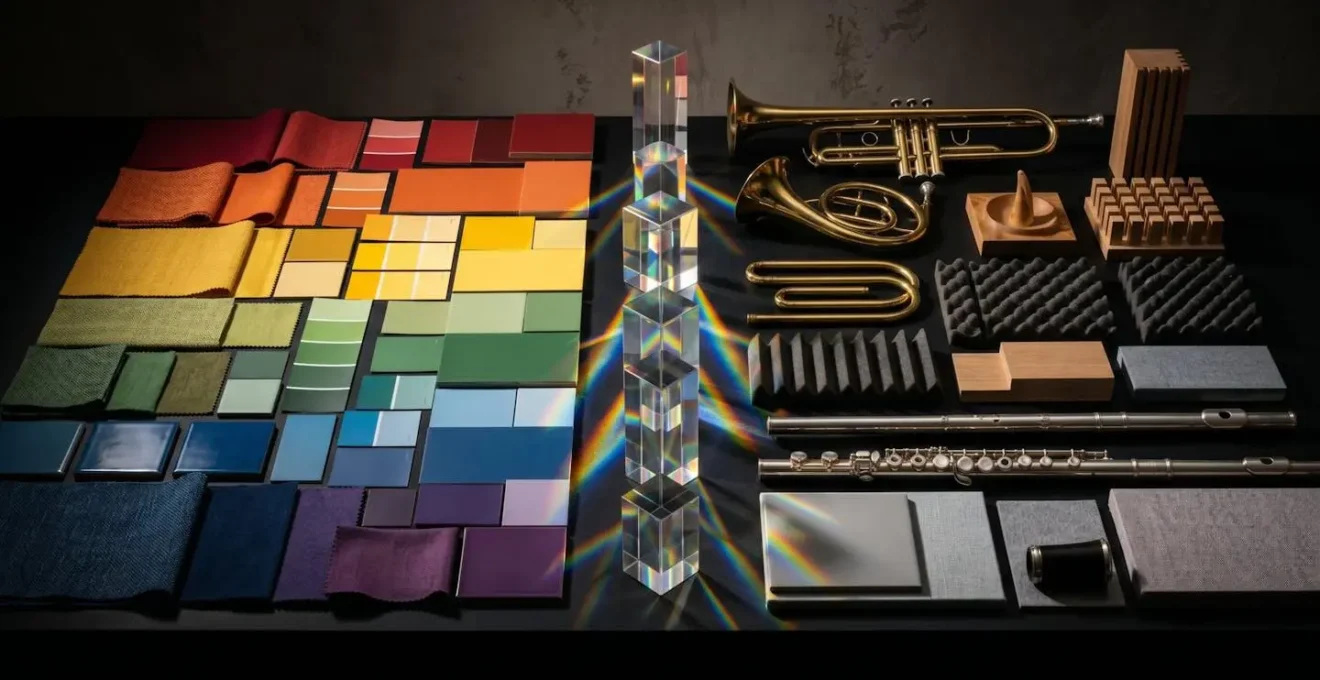
Your Cross-Modal Brand Alignment Checklist
- Match high-pitched sounds with bright visual colors and small, light brand elements.
- Align low-pitched, resonant sounds with dark colors and substantial visual weight.
- Ensure tempo matches brand pace – fast for tech startups, slow for luxury brands.
- Test warm sounds (low-mid frequencies) with warm color palettes (red, orange, yellow).
- Verify cool sounds align with cool visual elements (blue, green, metallic tones).
When to Play Your Sonic Logo: Start, End, or Transition?
Creating a brilliant audio logo is only half the battle; its strategic placement is what turns it from a sound into a signature. The question of when to deploy it—at the beginning of a video, at the end, or as a transitional element—depends on its intended function. Each position serves a different psychological purpose. Placing the mnemonic at the very start of an ad or video acts as an immediate « sonic handshake, » grabbing attention and framing the content that follows. This is effective for building awareness with a new sound.
However, the most common and powerful placement is at the end of the communication. Placed in the final few seconds alongside the visual logo, it functions as a « sonic punctuation mark. » It summarizes the entire message and links the positive emotions generated by the content directly to the brand. This end-cap placement is the workhorse of your sonic DNA, creating a consistent and reliable sign-off that builds equity over time. It’s not just a « sting » to get attention; it’s a meaningful signature that conveys brand values and personality. This final sound becomes the ultimate mnemonic device, locking the brand into the consumer’s memory at the peak of their engagement.
Transitional use is a more advanced technique, where a shorter version of the sound (an « earcon ») is used to signal a change of scene or topic within a piece of content. This helps create a cohesive narrative flow in longer videos or podcasts. The incredible speed of auditory processing makes these placements highly effective. Neuroscience research has found that the brain can recognize a familiar sound in just 0.146 seconds, nearly three times faster than it processes visual cues. This means even a brief sonic logo, placed strategically, can have an outsized impact on brand recognition and the overall coherence of the user experience.
Sidechain Compression or Keyframes: Which Ducking Method Sounds More Natural?
In any video content, the audio mnemonic must coexist with other sounds, primarily music and dialogue. « Ducking » is the technique of temporarily lowering the volume of one audio track (e.g., background music) to make room for another (e.g., a voiceover or the sonic logo). The method you choose—automatic sidechain compression versus manual keyframes—can drastically affect the perceived quality and professionalism of your brand’s sound. The choice is not just technical; it reflects your brand’s personality.
Sidechain compression is an automatic process where the presence of one audio signal triggers a reduction in the volume of another. It’s a « set-and-forget » method ideal for live streams or podcasts with unpredictable dialogue. When set with a gentle ratio and slow attack/release times, it can sound smooth and natural, creating an elegant and sophisticated feel. However, if configured aggressively, it can result in an audible « pumping » effect that sounds artificial.
Manual keyframing involves an editor manually drawing the volume automation curve, giving them frame-by-frame control. This method offers the highest level of artistic precision and is best suited for short-form content like brand films and advertisements where every moment counts. It allows for a more cinematic and energetic feel, as the music can swell and dip in perfect sync with the on-screen action. While more time-consuming, it ensures the ducking feels intentional and emotionally motivated, rather than purely functional. For ultimate clarity, a fast attack (10-20ms) and a slightly longer release (100-200ms) are recommended to ensure the music fades back in smoothly.
| Method | Best For | Brand Personality Fit | Technical Control |
|---|---|---|---|
| Sidechain Compression | Podcasts, Live streams | Elegant, Sophisticated brands | Automatic, Set-and-forget |
| Manual Keyframes | Short ads, Brand films | Cinematic, Energetic brands | Precise, Frame-by-frame |
How to Write a Video Style Guide That Freelancers Actually Follow?
Once you’ve composed the perfect audio mnemonic and defined its usage, this intellectual property must be protected through clear, enforceable guidelines. A video style guide is the primary tool for ensuring that every collaborator, from in-house editors to external freelancers, implements your sonic branding consistently. An effective guide is not a 100-page theoretical document; it’s a practical, accessible toolkit that makes it easy for creators to do the right thing.
To be useful, the guide must be prescriptive and provide direct access to assets. Instead of vaguely describing the brand’s sound, it should provide clear, non-negotiable rules and direct links. The sound section of your style guide should be a self-contained chapter that leaves no room for interpretation. It must include specifications for placement, volume levels, and technical mixing standards to ensure a uniform output across all content. This removes guesswork and prevents freelancers from making creative choices that dilute your brand’s sonic identity.
A truly effective sonic branding section in a video style guide should contain the following elements, structured for clarity:
- Official Asset Library: A direct download link to all approved versions of your sonic logo (the full « anthem, » the short « sting, » and any transitional « earcons »).
- Placement Rules: Visual diagrams showing exactly where the logo should appear (e.g., « The 3-second sting must start in the final 4 seconds of the video, with no overlapping dialogue »).
- Volume Specifications: Precise dB and LUFS targets (e.g., « Dialogue should peak at -6dB, while the sonic logo peaks at -10dB. The final stereo mix must target -14 LUFS integrated loudness »).
- Approved Music & Prohibitions: Links to the brand’s licensed music library and a clear list of what is forbidden (e.g., « No trending social media sounds, meme audio, or music from off-brand genres like heavy metal »).
Key takeaways
- Simplicity is paramount: A memorable audio mnemonic uses a few, well-chosen notes to reduce cognitive load and enhance recall.
- Composition over discovery: The best audio logos are intentionally layered with textures that tell a brand’s story and create a unique sonic DNA.
- Cross-modal harmony is crucial: Your brand’s sound must align with its visual identity (colors, shapes, pace) to create a cohesive and trustworthy sensory experience.
Why Inconsistent Video Styles Confuse Customers and Dilute Equity?
The final, and perhaps most critical, element is consistency. An audio mnemonic only becomes an asset through relentless, disciplined repetition. Every time a customer hears your sonic logo in a consistent context, the neural pathway associating that sound with your brand becomes stronger. Conversely, every inconsistency—a different version of the logo, incorrect placement, or its complete absence—weakens that connection. This is why a fragmented audio strategy is so damaging; it’s the sonic equivalent of changing your visual logo every year, resulting in zero brand attribution and no accumulated equity.
This isn’t just theory; it’s backed by hard data. When a brand’s sonic cues are consistently applied, they become incredibly effective drivers of advertising performance. Research by Ipsos has revealed that advertisements containing sonic brand cues tested 8.53x more effective in terms of brand recognition and engagement. Inconsistency leaves this massive advantage on the table. It forces the brain to re-evaluate the brand’s identity with each new piece of content, creating confusion instead of confidence. When a customer can predict the sonic sign-off of your video, you have achieved brand equity. When they can’t, you simply have noise.
Treating your sonic identity as a fluid, adaptable element is a fundamental misunderstanding of its purpose. Its power lies in its stability. A brand manager’s role is to be the guardian of this consistency, ensuring that the carefully composed « sensory-emotional chord » is played the same way, every time. This discipline is what transforms a simple sound into an invaluable asset that triggers instant recognition and builds a lasting, emotional connection with your audience.
Now that you understand the principles of composition and consistency, the next step is to begin auditing your own brand’s sensory landscape and planning the creation of a sound that is not just heard, but felt and remembered.